Why Experienced Contractors Always Stick to Trusted Cement Brands in India



Table of Content
Ask any seasoned contractor what they've learned over the years on construction sites, and one answer comes up consistently: never compromise on cement. You can negotiate on timelines, adjust designs, and find cost savings in many places, but the cement brands you use for your construction project are not where experienced builders cut corners. There's a reason for that, and it goes well beyond brand loyalty.
The Material That Holds Everything Together
Cement is the binding agent in every concrete structure, including columns, beams, slabs, walls, and foundations. The building is supported by strong steel reinforcements, built with the correct aggregates, and the mix ratio spot on, but if the cement is of poor quality, the entire building is compromised.
This is what makes selecting cement from a trusted brand and quality so important. Cement looks the same in every bag, but the difference between a reliable product and a poor one becomes visible after the cracks in a wall or seepage in a slab show up. By then, the cost of fixing it far exceeds whatever was saved at the time of purchase.
What Makes a Cement Brand Worth Trusting
Experienced contractors don't pick a brand arbitrarily. Their preferences are built on measurable factors:
| Factor | What Contractors Look For |
|---|---|
| Consistency | Same quality across every batch, every delivery |
| Compressive Strength | Meets or exceeds grade requirements (OPC 43, OPC 53, PPC) |
| Fineness | Finer particles hydrate more completely, giving better strength |
| Setting Time | Predictable initial and final set for site planning |
| Water Demand | Lower water requirement means denser, stronger concrete |
| Certifications | BIS certification and ISO compliance |
| Supply Reliability | Consistent availability through authorised dealer networks |
| Technical Support | Access to company-backed guidance when needed |
The Problem With Switching Brands Mid-Project
One thing contractors are particularly strict about is not switching cement brands between different stages of the same project. Cements from different manufacturers differ in fineness, chemical composition, and setting characteristics. When you mix batches from different sources across a continuous pour, it leads to inconsistencies that affect the uniformity of strength throughout the structure.
This is a practical reason why reputable contractors lock in their cement supplier before the start of the project and stick with them throughout.
OPC vs PPC: Choosing the Right Type Within a Trusted Brand
Even within a single trusted brand, the type of cement matters depending on what you're building.
| Cement Type | Best Used For | Key Property |
|---|---|---|
| OPC (Ordinary Portland Cement) | Foundations, columns, heavy load-bearing structures | High early strength, withstands heavy loads |
| PPC (Portland Pozzolana Cement) | Plastering, general construction, finishing work | Excellent workability, superior finish, long-term durability |
| Specialised variants (e.g., waterproof, high-density) | Slabs, water-exposed surfaces, and coastal construction | Enhanced resistance to moisture and chemical attack |
What ISO Certification and BIS Compliance Actually Mean
BIS certification means that the product has been independently tested and verified to meet Indian Standards for cement quality. ISO certification means that the manufacturing process itself follows the international standards.
For a contractor who is managing a client project for structures like a home, these certifications provide an assurance that the material they're using meets defined quality standards.
The Long-Term Economics of Choosing Right
Premium cement per bag typically costs more upfront than unbranded or lower-grade alternatives. But what contractors need to understand and what homeowners sometimes need reminding of is that this difference is easily balanced out when measured against the total construction budget.
For a 1,000 sq ft home, cement usually makes up about 10–15% of your total material cost. If you choose to upgrade from a basic option to a trusted brand like Adani Cement, it might increase that portion by around 5–8%.
But when you think long-term, that extra cost is actually quite small. Poor-quality cement leads to persistent issues with the building’s integrity, and fixing those later can cost you lakhs. Plus, repairs are not just expensive, they’re messy, time-consuming, and never as smooth sailing as getting it right the first time.
That’s why most experienced contractors keep it simple: invest in the right cement from the beginning and avoid bigger problems later.
The Bottom Line
Trusted cement brands earn their reputation through consistent performance, certified quality standards, and reliable supply. And when experienced contractors specify a particular brand on their projects, it reflects years of on-site learning about what actually holds up and what doesn't.
For anyone building a home or a commercial structure, the lesson is clear: your cement choice is one of the few decisions in construction where brand genuinely matters. Make it a deliberate one.
FAQ’s
Q.1 Which cement brands are top-rated in India?
Top-rated cement brands in India are those known for consistent quality, strong compressive strength, and reliable supply. Adani Ambuja Cement is a widely trusted cement brand among contractors due to our performance across batches, certified quality standards, and specialised product offerings for different construction needs.
Q.2 What is Adani Cement's business in India?
Adani Cement is one of India’s leading cement businesses, operating through brands like Ambuja Cement and ACC. It focuses on manufacturing high-quality cement with advanced formulations, ensuring durability and strength. The company also invests in sustainable practices and innovation to meet modern construction demands across residential and infrastructure projects.
Q.3 Who are the top cement suppliers in my area?
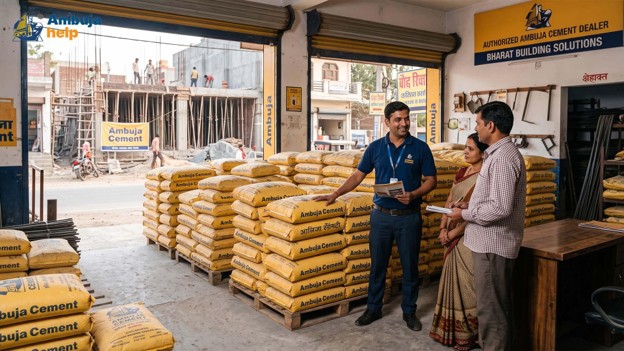
Top cement suppliers in any area are typically authorised dealers approved by the brand. For Ambuja Cement, we have an authorised dealer network spread across the country that caters to the needs of contractors and homeowners for different project needs. We ensure that our affiliated suppliers have consistent stock availability, genuine products, and timely delivery. Refer to our “Find A Dealer” page on our bestie to look for an Ambuja cement dealer nearest to your location.
Q.4 Which cement is best for roofing work?
For roofing work, cement with low absorption and high density is ideal to prevent seepage. PPC or specialised waterproof cement are the most commonly used. Products like Ambuja Plus, designed with enhanced resistance to moisture, help create durable slabs that reduce long-term leakage issues and improve overall structural integrity.
Q.5 Why should you avoid switching cement brands mid-project?
Switching cement brands mid-project can lead to inconsistencies in strength, setting time, and overall performance. Different brands have varying compositions and fineness levels, which affect bonding. This can compromise structural uniformity, especially in continuous pours, making it critical to stick with one trusted brand throughout construction.