Types of Concrete Walls in Building Construction: A Complete Guide


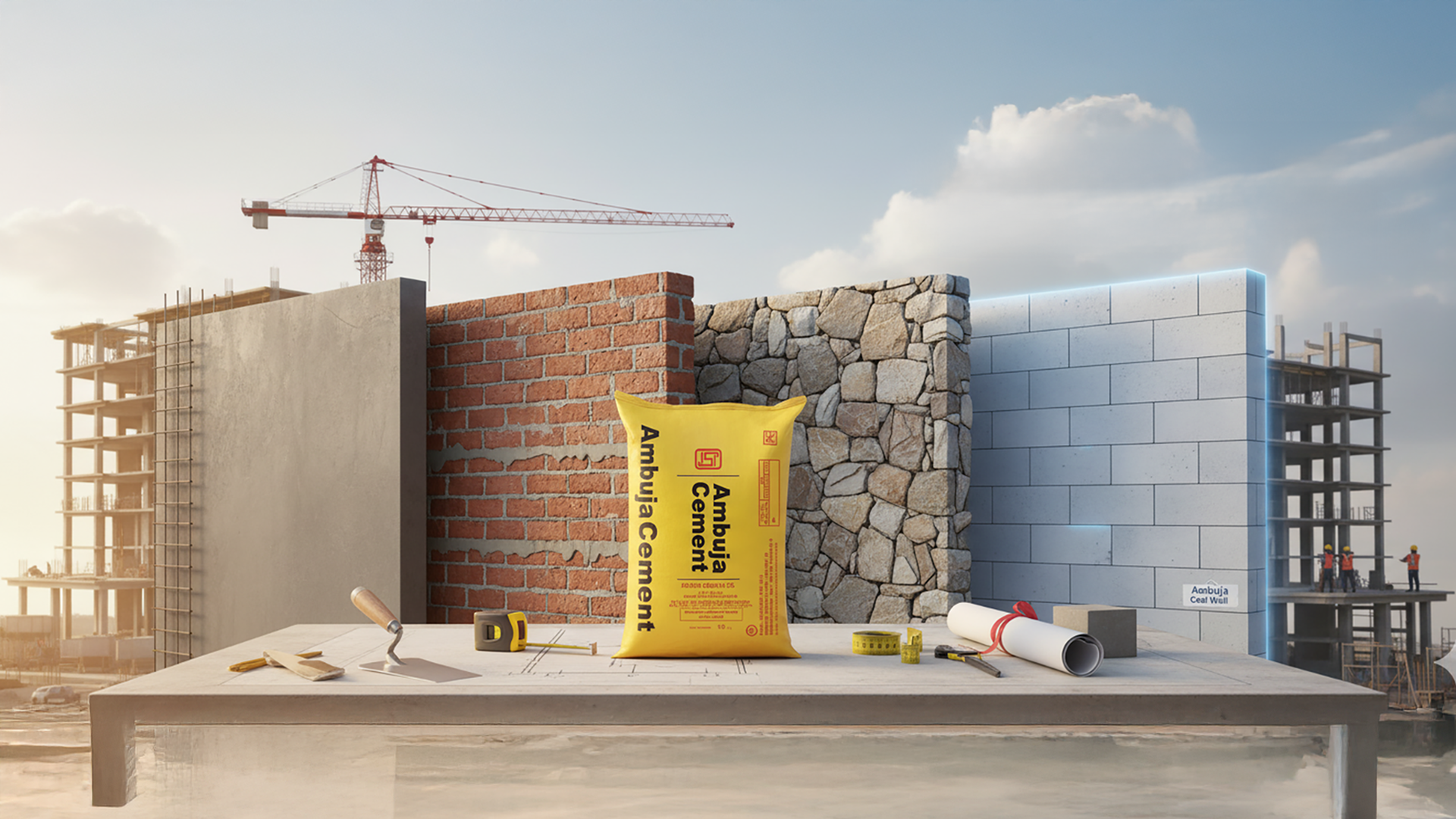
Table of Content
Without walls, there is no building. They are responsible for supporting the load and defining the space, and play a major role in the design of a building. Whether you’re planning to build a unique modern home or a robust commercial complex, understanding the types of concrete walls constructed according to different methods can help you make the right choice for strength, efficiency, and aesthetics.
Beyond their functional role, walls shape the ambiance of a space, providing privacy and insulation. Let’s explore the most common types of walls in modern building construction, and how the right material, such as high-quality construction cement, can make all the difference.
1. Load-Bearing Walls
A load-bearing wall does exactly what its name suggests: it bears the load of the structure above it. These walls support the weight of roofs, slabs, and upper floors, transferring that weight safely down to the building’s foundation.
They are typically constructed using brick, stone, or reinforced concrete and must be built with care, as altering or removing them can put the building’s stability at risk. In urban building projects, reinforced concrete walls are preferred for their high durability and excellent load distribution capacity.
2. Non-Load-Bearing Walls
Non-load-bearing walls do not carry any extra load other than their own weight. Their primary function is to divide a space into rooms or sections, defining a space.
Because they do not support the structure, these walls can be thinner and lighter, often built with materials such as lightweight concrete blocks, timber, or gypsum boards. They also allow greater flexibility in interior design, best for home design that prioritises adaptable spaces.
3. Partition Walls
A subset of non-load-bearing walls, partition walls are used exclusively for dividing interior spaces. They can be temporary, movable, or even decorative. Common materials include plywood, glass, and gypsum board, but in recent years, lightweight concrete blocks have also become a favourite for their fire resistance and durability.
4. Brick Walls
Traditional brick walls have been the core of construction for centuries. They are versatile, serving as both load-bearing and non-load-bearing structures.
Bricks offer good thermal insulation, sound resistance, and an earthy charm that complements various design ideas. When combined with strong, high-grade construction cement, they provide durability and aesthetic appeal at an affordable cost.
However, conventional brick walls can be prone to efflorescence (the “salt” issue that causes white deposits and plaster erosion). This is where Ambuja Cool Walls provides a superior alternative, anti-efflorescent, stronger, and heat-proof, making them a quality upgrade over traditional brickwork.
5. RCC Walls (Reinforced Cement Concrete Walls)
RCC walls are built with reinforced concrete, and they integrate steel bars within concrete to handle both compressive and tensile stresses.
This combination results in walls that are very strong, durable, and capable of withstanding high loads and harsh weather conditions. RCC walls are ideal for high-rise buildings, commercial complexes, and infrastructure projects where stability and longevity are paramount.
Because of their high load-bearing capacity and resistance to fire, moisture, and corrosion, RCC walls are often used for basements, retaining walls, and seismic-resistant construction. Pairing quality steel with Ambuja Cement ensures the reliability and performance that today’s engineers demand.
6. Stone Walls
For those who like rustic appeal with enduring strength, stone walls are a good choice. Made with cut or raw stones bonded by mortar, these walls offer both load-bearing strength and visual appeal.
They’re extremely weather-resistant and provide natural thermal insulation, keeping interiors cool in summer and warm in winter. Although traditional in nature, when built using premium construction cement, stone walls can last for decades with minimal maintenance.
7. Masonry Walls
Masonry walls are constructed using bricks, stones, or concrete blocks bound together with mortar. They can serve as both load-bearing and non-load-bearing structures, depending on their thickness and design.
These walls are known for their durability, fire resistance, and pest-proof properties. They’re flexible enough to be used in homes, offices, and industrial buildings alike. When high-quality cement and modern masonry techniques are used, they deliver exceptional strength and a refined finish.
The Importance of Choosing the Right Wall
Walls define the building's stability, comfort, and energy efficiency of a building. The choice between brick, RCC, or concrete walls depends on the building’s purpose, environmental conditions, and budget.
Today’s construction landscape is shifting toward smarter, sustainable solutions, and Ambuja Cool Walls are a part of this transformation. Their advanced technology minimises heat transfer, reduces maintenance issues like efflorescence, and ensures a comfortable indoor environment.
Final Thoughts
Walls are the foundation of strength, safety, and comfort in any structure. From load-bearing to RCC to innovative cool walls, every type plays a vital role in shaping the durability and design of a building.
By understanding these different types and choosing the right materials, builders, architects, and homeowners alike can ensure that their spaces remain stronger, better, and cooler for generations to come.