Does Cement Price Change by Season in India? What Homeowners Should Know


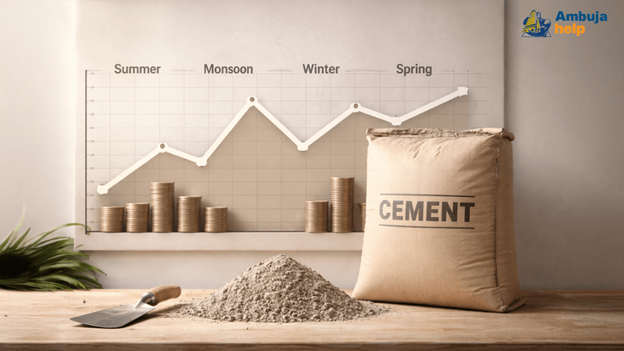
Table of Content
If you have ever found yourself at the beginning or in the middle of a home construction project and noticed that the cement price that was quoted just last month is not what the dealer is charging today. You are not imagining things.
Cement prices in India are not fixed. They shift, sometimes gradually, sometimes quite sharply, and the reasons behind those shifts are more predictable than most homeowners realise.
The good news is that once you understand what drives these changes, you can plan your purchases more intelligently, time your bulk orders better, and avoid paying peak-season rates when you do not have to.
Here is a straightforward guide to how cement pricing actually works across the Indian calendar year.
The Big Picture: Why Does Cement Price Move at All?
Cement is not priced in a vacuum. Every bag that reaches a construction site has passed through a logistics chain, a dealer network, and a local market, each of which is affected by its own set of changes.
The factors that most consistently influence cement pricing in India are:
| Factor | How It Affects Price |
|---|---|
| Seasonal construction demand | More building activity = higher demand = firmer prices |
| Monsoon slowdown | Fewer active sites = lower demand = softer prices |
| Fuel and transport costs | Higher diesel prices raise delivery costs across the chain |
| Festive calendar | Short bursts of activity push local prices up briefly |
| Regional logistics | Road conditions, truck availability, and distance from the plant all affect the final cost |
| Manufacturing costs | Power and energy costs at cement plants affect the base price |
Season by Season: What Actually Happens to Prices
October to June: The Busy Months
These months are considered the peak construction season across most of India. Clear weather, better road conditions, stable labour availability, and the post-monsoon push to complete building phases all combine to drive construction activity and with it the cement demand, to its highest levels of the year.
During this period, prices, including Ambuja cement rates, tend to remain high. Dealers are having a good business, so there’s actually no incentive to offer discounts. So if you’re buying large quantities during this window, expect to pay more than you would in other months.
Mid-June to September: Monsoon Season
Rain disrupts almost everything on a construction site: curing, mixing, transport, and labour scheduling all slow down drastically. The result is a noticeable drop in demand across the industry.
This is typically the period when cement prices go down. Dealers have difficulty clearing their existing stock due to slower on-site action. This is the time when builders and contractors use this window to buy in bulk at more manageable rates.
Peak Summer (April to June): A Different Kind of Pressure
Summer is a complicated period for cement pricing. Demand from construction is still high, but something else is also happening: production itself becomes more expensive. Cement plants consume more power in extreme heat, and transport faces heat-related delays and restrictions.
Even if demand in your local area is steady, the costs from manufacturing and logistics can push prices upward. It is common to see rates shift by ₹5–₹15 per bag during this period purely because of operational costs, not because of anything happening at your construction site.
A Practical Calendar: When to Buy and When to Wait
| Period | Typical Price Trend | Best Strategy |
|---|---|---|
| October – November | Rising as peak season begins | Buy early before prices climb further |
| December – February | Firm, peak demand | Budget for higher rates; avoid non-essential bulk purchases |
| March – April | Firm to rising, summer cost pressure builds | Complete major purchases before summer peaks |
| May – June | Elevated production and logistics costs are high | Delay non-urgent purchases if possible |
| July – September | Softer, monsoon slowdown | Good window for bulk buying if storage is available |
| Post-festival windows | Normalising after short spikes | Good time to purchase at stabilised rates |
The Regional Factor: Why the Same Cement Costs Different Amounts in Different Places
One thing that surprises many homeowners is that the same brand of cement, manufactured at the same plant, can cost meaningfully different depending on where you are buying it.
This is entirely normal, and it comes down to a few consistent reasons:
- Distance from the manufacturing plant — transport costs are a significant component of the final price, and they increase with distance
- Local road and infrastructure quality — poor roads raise transport costs and time
- State-level taxes and levies — these vary considerably across India
- Local demand intensity — a city with a construction boom will have firmer prices than a quieter town nearby
- Dealer network density — more authorised dealers in an area generally means more competitive pricing
Quality is the One Thing That Should Not Change With the season.
Prices will move. That is simply the reality of how cement markets function in India. What should not move is the quality of what you are buying.
This is an important distinction. Buying cement with the lowest available price can sometimes lead homeowners towards substandard products or unverified sources. The long-term cost of using inconsistent or poor-quality cement always translates to cracks, structural weakness, and ongoing repairs, and almost always exceeds the short-term savings on the bag price.
That’s where we come in. Ambuja Cement maintains consistent quality standards across seasons, which matters enormously when you are building something meant to last for decades and buying from authorised Ambuja dealers ensures you are getting a genuine product regardless of when in the year you are purchasing.
What This Means for Your Project Planning
A few practical takeaways worth keeping in mind:
- Track local rates for four to six weeks before any major purchase. If your project allows monsoon-period purchasing and you have dry storage, use it.
- Build a small buffer into your material budget for price fluctuations.
- Buy from authorised dealers.
- Plan large pours and milestone phases away from known peak periods
Understanding how and why cement prices move through the year does not require a background in economics or construction. It just requires paying attention to the patterns and using what you observe to make smarter, better-timed decisions for your home.
FAQs
Q.1 Which is the best cement brand in India for house construction?
The best cement brand is one that offers consistent quality, strong performance, and reliable supply. Ambuja Cement is widely preferred due to its durability and quality control. Choosing a reputed brand ensures long-term structural strength and reduces the risk of repairs.
Q.2 Which cement brand is considered the best cement in India currently?
Several brands are considered among the best in India, including Ambuja Cement and ACC Cement. The “best” often depends on your project needs, but contractors usually prioritise brands known for consistent quality, certifications, and reliable dealer networks.
Q.3 Which is the best cement in India for long-lasting construction?
For long-lasting construction, cement with high durability and resistance to environmental stress is ideal. PPC and specialised variants from trusted brands like Ambuja Cement are commonly used. These offer better resistance to cracking, moisture, and long-term wear, making them suitable for homes built to last decades.
Q.4 What is the average cement price for house construction?
The average cement price in India typically ranges between ₹300 and ₹450 per bag, depending on the brand, region, and season. Prices may rise during peak construction months and fall during the monsoon. Tracking local rates and buying strategically can help manage costs effectively during your construction project.
Q.5 When is the best time to buy cement for construction?
The best time to buy cement is usually during the monsoon season when construction activity slows and prices soften. If you have proper storage, bulk purchasing during this period can reduce costs. Avoid peak construction months when demand is high, and dealers are less likely to offer competitive pricing.