Common Types of Concrete and Their Uses in Construction


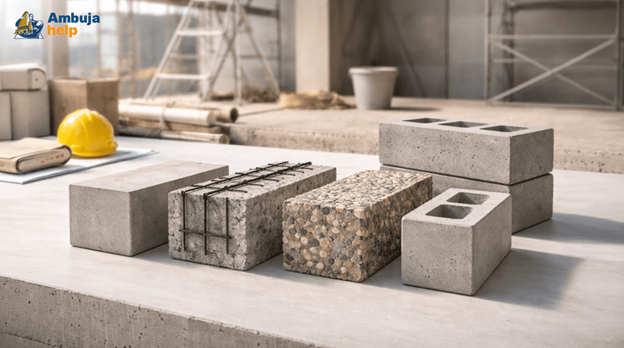
Table of Content
It goes without saying that concrete materials are an essential raw material in any building project. It's poured into foundations, shaped into columns, spread across slabs, and once it sets, it quietly holds everything together for decades. Concrete is such a common requirement for construction that it's easy to take it for granted. But not all concrete is the same, and using the wrong type in the wrong place can lead to problems that are expensive, dangerous, and very avoidable.
Whether you're building a home, renovating, or just trying to understand what your contractor is telling you, here's a practical guide to the most common types of concrete and where each one belongs.
What is Concrete, Really?
Concrete is a mixture of three things: cement, water, and aggregates (sand, gravel, or crushed stone). When mixed in the right proportions and with proper curing, concrete hardens into one of the most durable and versatile materials used in construction.
The cement acts as the binder. The aggregates give it bulk and compressive strength. The water triggers the chemical reaction called hydration, which causes the mix to harden. It’s also important to note that the ratio of water to cement is particularly important: too much water weakens the final product; too little makes it unworkable.
In many modern mixes, additives like fly ash, slag, or chemical plasticisers are introduced to improve specific properties like faster setting time, better workability, moisture resistance, or reduced carbon footprint.
Why Concrete Dominates Construction
Before diving into the types, it's worth understanding why concrete remains the material of choice across every category of construction:
| Property | Why It Matters |
|---|---|
| High compressive strength | Handles heavy loads without crushing |
| Fire resistance | Doesn't burn or melt under heat |
| Versatility | Can be moulded into almost any shape |
| Durability | Lasts decades with minimal maintenance |
| Affordability | Cost-effective relative to its performance |
| Availability | Raw materials are widely accessible in India |
The Most Common Types of Concrete Materials and Where They're Used
1. Plain Cement Concrete (PCC)
PCC is the most basic form. It’s cement, sand, aggregate, and water, mixed without any reinforcement. It has good concrete strength in compression but limited resistance to tension or bending forces.
Used for: Flooring base layers, pathways, levelling surfaces, and as a bed beneath structural concrete.
2. Reinforced Cement Concrete (RCC)
It’s a specialised concrete. In it, steel bars (rebars) or mesh are embedded into the concrete mix, giving it tensile strength that plain concrete lacks. The steel handles the pulling and bending forces; the concrete handles the compression. Together, they create a material that's far stronger than either alone.
Used for: Foundations, columns, beams, slabs, bridges, and high-rise buildings. If you're building concrete homes designed to last for generations, RCC is the best concrete option you’ll be using.
3. Lightweight Concrete
Lightweight concrete uses low-density aggregates such as pumice, expanded clay, or aerated materials to reduce the overall weight of the mix without significantly compromising strength.
Used for: Roof slabs, non-load-bearing walls, precast panels, and multi-storey buildings where reducing dead load matters. This type is particularly useful in renovation projects where adding weight is a concern.
4. High-Strength Concrete
With a compressive strength exceeding 40 MPa, high-strength concrete is used for high-strength applications. It typically uses a lower water-to-cement ratio and often incorporates silica fume or other supplementary materials to achieve greater density and strength.
Used for: Skyscrapers, dams, industrial floors, heavy-load infrastructure, and any structure that must endure significant stress over a long period.
5. High-Performance Concrete
A step beyond high-strength, high-performance concrete is formulated for enhanced durability, workability, and resistance to extreme conditions.
Used for: Offshore structures, nuclear facilities, marine construction, and projects in regions with extreme climatic conditions.
6. Ready Mix Concrete (RMC)
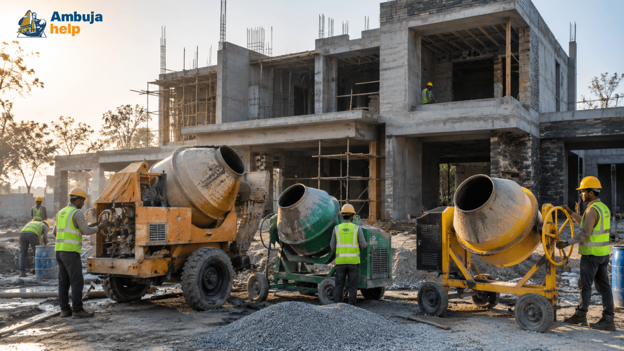
Ready Mix Concrete is batched at a centralised plant and delivered to the construction site in a mixer truck, ready to pour. Because it's produced under controlled conditions, the consistency and quality are more reliable than site-mixed concrete.
Used for: Large-scale residential projects, commercial buildings, and any project where consistency, speed, and quality control are priorities. The major advantage here is a reduction in waste and human error.
7. Precast Concrete
Precast concrete elements are cast in a factory setting, cured under controlled conditions, and then transported to the site for installation. This ensures higher precision and faster on-site assembly.
Used for: Beams, columns, wall panels, staircases, and drainage systems.
8. Green Concrete
Green concrete is one of the key developments in modern construction. It's manufactured using industrial waste products like fly ash, slag, and recycled aggregates as partial replacements for conventional raw materials. This significantly reduces the carbon footprint of the mix while maintaining performance standards.
Used for: Sustainable residential and commercial construction, government infrastructure projects with environmental compliance requirements, and any project where reducing environmental impact is a goal.
| Concrete Type | Key Strength | Primary Use |
|---|---|---|
| Plain Cement (PCC) | Compression | Levelling, flooring base |
| Reinforced (RCC) | Compression + Tension | Structures, slabs, columns |
| Lightweight | Reduced dead load | Roofs, non-load-bearing walls |
| High-Strength | Very high compression | Skyscrapers, dams |
| High-Performance | Durability + strength | Extreme environments |
| Ready Mix | Consistency | Large-scale projects |
| Precast | Precision + speed | Panels, beams, staircases |
| Green Concrete | Sustainability | Eco-friendly builds |
How Cement Quality Shapes Concrete Performance
The type and quality of cement you use is the single biggest variable in how the concrete performs. Ambuja Cement offers a range of cement solutions suitable for different concretes, such as OPC for heavy structural loads, PPC for workability and finish, and specialised cements like Ambuja Plus (formulated with SPE technology for enhanced strength and density) and Ambuja Compocem (a Portland Composite Cement built for sustainability without sacrificing performance).
Final Thoughts
Concrete is not a one-size-fits-all material. The right type depends on what you're building, where you're building it, and what forces that building has to handle over its lifetime. That’s why understanding the differences puts you in a far stronger position when working with your engineer or contractor.
Frequently Asked Questions
Q1. Which is the best cement brand in India for house construction?
Choosing a reliable cement brand is crucial for strong and durable construction. Ambuja Cement is widely trusted for its consistent quality, offering OPC and PPC variants suitable for different structural needs.
Q2. Which cement brand is considered the best cement in India currently?
Among leading options, Ambuja Cement stands out for innovation and reliability. Products like Ambuja Plus and Compocem are engineered for strength, workability, and sustainability. Their consistent performance in diverse Indian conditions makes them a preferred choice for homeowners and builders seeking dependable construction materials.
Q3. Which is the best cement in India for long-lasting construction?
For long-lasting construction, cement with high strength and durability is essential. Ambuja Cement offers solutions like OPC for structural strength and PPC for enhanced durability and finish. These variants help reduce cracks, improve resistance to environmental stress, and ensure buildings remain strong for decades.
Q4. What is the average cement price for house construction?
The average cement price in India ranges from ₹350 to ₹450 per bag, depending on the type and region. Premium offerings from Ambuja Cement may cost slightly more, but deliver superior strength, consistency, and reduced maintenance costs, making them a cost-effective investment over the building’s lifecycle.
Q5. How does cement quality impact different types of concrete?
Cement quality directly affects the strength, durability, and workability of all concrete types. Using trusted products from Ambuja Cement ensures better performance in PCC, RCC, and high-performance concrete.