Common Roofing Mistakes and How the Right Cement Prevents Them


Table of Content
A roof protects your home from rain, heat, wind, and changing temperatures. However, many roofing problems can start during construction, long before a leak becomes visible. Issues like poor drainage, incorrect mixing, inadequate curing, and unsuitable materials can gradually weaken the roof.
The good news is that many of these issues can be prevented with proper planning and good workmanship. Cement plays an important role in building a strong roof slab, but it needs to work together with the right mix design, reinforcement, waterproofing, and drainage system.
1. Choosing Cement Only by Price
One common mistake is selecting cement because it costs less. It may not provide the characteristics required for a particular roof application. When comparing the best cement for a roof, consider strength, durability, workability, consistency, and suitability rather than price alone. Follow your engineer's structural specifications.
Ambuja Cement is a premium source of quality cement raw materials, with options designed for different construction requirements.
2. Using Too Much Water
Adding extra water can make concrete easier to mix and place, but it can also increase porosity and reduce strength after hardening. More water can create pathways through which moisture may move.
For better results:
- Follow the specified water-cement ratio.
- Avoid adding water casually at the site.
- Use suitable admixtures when recommended.
- Maintain consistent batching practices.
3. Ignoring Proper Roof Slope
Even well-made concrete can face leakage problems if water remains standing on the roof. An inadequate slope prevents rainwater from reaching drainage outlets efficiently.
Plan the roof slope according to the design and ensure outlets remain clear. Good drainage reduces prolonged exposure to moisture and helps protect the slab.
4. Rushing the Curing Process
Curing allows concrete to develop strength and helps reduce premature moisture loss. Insufficient curing can contribute to cracking and weaker concrete. Follow the curing method recommended by your construction professional. Protect fresh concrete from excessive heat and rapid drying, especially during hot weather.
5. Skipping Waterproofing and Joint Protection
Cement supports roof performance, but it is not a complete waterproofing system. Waterproofing layers, joints, drainage, and roof penetrations also need attention. While selecting a waterproof cement for the roof, choose a suitable product based on roofing requirement. Waterproofing should complement sound structural design and workmanship.
6. Poor Quality Aggregates and Mixing
Good cement cannot compensate for poorly selected aggregates or inconsistent mixing. Aggregate grading, cleanliness, proportions, and moisture can influence the final concrete. Before pouring, make sure:
- Aggregates meet the required specifications.
- Materials are measured consistently.
- Mixing is thorough.
- Reinforcement is correctly positioned.
- Concrete is placed without unnecessary delays.
7. Overlooking Drainage and Maintenance
Roof protection does not end after construction. Blocked outlets, cracks, and debris can create conditions for water seepage. Inspect the roof periodically, especially before and after the monsoon. Clean drainage outlets and address small cracks or damaged areas before they become larger problems.
How the Right Cement Supports Roof Performance
The right cement can help produce stronger and denser concrete when it is used with a suitable mix design. Consistent raw materials also support more predictable performance. However, factors such as water content, proper compaction, and adequate curing are equally important for achieving the desired results.
For different roofing needs, Ambuja offers specialised options:
- Ambuja Plus: A PPC cement made using SPE (Special Performance Enhancer) technology. It is designed to provide enhanced strength and density, along with resistance to leakage. It can be considered when these properties suit the project requirements.
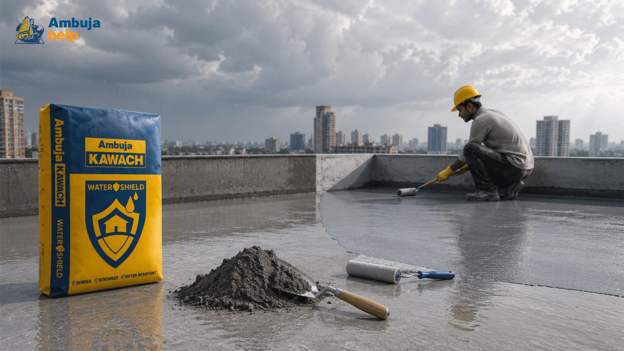
- Ambuja Kawach: A specially formulated cement with water-repellent properties. Its performance-enhancing components are designed to help resist water seepage, making it suitable for foundations, slabs, and walls where moisture resistance is required.
Common Mistakes at a Glance
| Roofing mistake | Potential concern | Better approach |
|---|---|---|
| Excess water | Higher porosity | Control water content |
| Poor slope | Water accumulation | Plan effective drainage |
| Inadequate curing | Reduced strength | Follow curing requirements |
| Weak waterproofing details | Seepage | Protect joints and penetrations |
| Poor aggregates | Inconsistent concrete | Use suitable materials |
| Delayed repairs | Larger defects | Inspect and repair early |
Conclusion
A durable roof starts with avoiding mistakes. Use suitable cement, control water, maintain the correct slope, cure concrete properly, protect vulnerable joints, and keep drainage systems clear.
The best cement for roof repairs is ultimately the one that perfectly matches your needs and is used correctly. Explore Ambuja Cement range to understand the available solutions, and consult your construction professional to choose the right product for your roof.
Frequently Asked Questions
Q1. What are common roofing mistakes during construction?
Common mistakes include incorrect water content, poor concrete mixing, inadequate curing, improper drainage, insufficient waterproofing, and using materials that do not suit the project's requirements.
Q2. How does cement quality affect roof construction?
Consistent cement quality can support predictable concrete performance when combined with proper mix design, adequate compaction, curing, reinforcement, and suitable waterproofing practices.
Q3. Which Ambuja cement can be considered for roof construction?
Ambuja Plus can be considered for roof construction where enhanced strength, density, and resistance to leakage align with the project's specifications and professional recommendations.
Q4. Can Ambuja Kawach help protect roofs from water seepage?
Ambuja Kawach has water-repellent properties designed to help resist water seepage and can be considered for slabs and other applications requiring moisture resistance.
Q5. Is cement alone enough to prevent roof leakage?
No. Effective roof protection requires suitable cement, proper drainage, waterproofing, correct mix design, reinforcement, curing, joints, and good workmanship working together.