What is Water-Repellent Cement and How Does It Work?


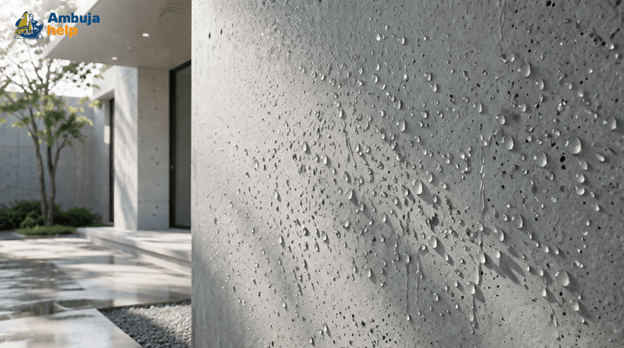
Table of Content
If you've ever noticed damp patches spreading across a wall after a heavy rain, or seen paint flaking off a ceiling every monsoon, then you know what water can do to a building over time. India has heavy monsoons that stretch for long periods, creating the perfect conditions that lead to building damage and costly construction problems for homeowners. The good news is that this is largely preventable, and it starts with understanding water-repellent cement and how it works.
What Exactly is Water-Repellent Cement?
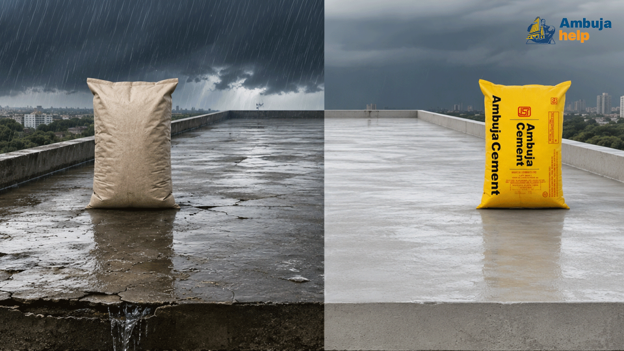
Regular cement is porous, and when water comes into contact with a cement surface, it finds its way through the little gaps, cracks, and pores. Over time, this leads to a multitude of problems like dampness, mold, flaking, corrosion of the steel frame, and, in serious cases, hollowing of the structure.
Water-resistant cement is a specially made variant to protect the building from these kinds of damage. It’s blended with waterproofing additives and performance-enhancing compounds that fill the natural pores and gaps in the cement mix, creating a barrier that prevents water from seeping beyond the surface.
Why Does Waterproofing Matter in Indian Construction?
India's climate is diverse, and that's precisely what makes waterproofing important. Consider the range of conditions a building faces:
| Region | Key Water-Related Threat |
|---|---|
| Coastal areas (Mumbai, Chennai, Kochi) | High humidity, salt-laden air, monsoon rains |
| Hilly regions (Northeast, Himachal) | Heavy and prolonged rainfall |
| Plains (Delhi, UP, Bihar) | Waterlogging during monsoons |
| Arid zones (Rajasthan, Gujarat) | Sudden intense rainfall after dry spells |
Whichever might be the region, water will find a way to get through the structure’s surface from areas like the roofs, walls, floors, foundations, and joints. That is why the right waterproofing is important, or else even a well-built home can start showing damage within a few years.
How Does Water-Repellent Cement Work?
The science behind it is simple. When waterproofing agents, typically silicates, polymers, or crystalline compounds, are blended into the cement during manufacturing, they alter how the final mix behaves.
Here's what happens at a structural level:
-
Pore Filling The additives fill microscopic voids in the cement paste, leaving fewer pathways for water to travel through.
-
Surface Sealing A hydrophobic (water-repelling) layer forms on the surface, causing water to bead and roll off rather than absorb.
-
Crack Resistance Some formulas create a denser, more cohesive mix that is less prone to the micro-cracks through which water typically enters.
-
Protection of Steel Reinforcement By blocking water ingress, the cement also protects embedded steel rebars from rust and corrosion.
Types of Cement Waterproofing
Not all waterproofing works the same way. Here's a quick breakdown of the main approaches:
| Type | How It Works | Best For |
|---|---|---|
| Integral Waterproofing | Additives mixed into cement during construction | Foundations, slabs, basements |
| Surface Waterproofing | Applied as a coating over finished surfaces | Roofs, terraces, bathrooms, balconies |
| Crystalline Waterproofing | Compounds react with cement and water to form crystals that seal pores | Underground structures, water tanks |
For most homeowners, integral waterproofing that involves using the water-repellent cement is the most effective and hassle-free approach.
What Problems Does It Prevent?
Using a water-resistant cement from the construction stage protects against:
- Dampness and seepage through walls and ceilings
- Paint peeling and flaking caused by moisture buildup beneath the surface
- Mold and fungal growth, which can affect both the structure and indoor air quality
- Efflorescence, or the white salt deposit you sometimes see on exterior walls
- Corrosion of steel reinforcements, which compromises the structural skeleton of the building
- Cracks caused by repeated cycles of water absorption and drying
How to Get the Most Out of Water-Repellent Cement
Even the best cement performs only as well as its application. A few practical tips:
-
Surface Preparation
Make sure the surface is clean, dry, and free of dust, oil, or loose particles before using. Any contamination greatly reduces its effects.
-
Even Application
Apply in uniform layers across the entire surface. Skipping spots or applying unevenly creates weak points where water can still enter.
-
Proper Curing
Curing is what allows cement to develop its full strength and waterproofing properties. Don't rush it. Inadequate curing is one of the most common reasons waterproofing fails.
-
Choose the Right Formulation
Not every cement is built for every application. Check whether the cement you're using is specifically designed for waterproofing, or whether you need a separate waterproofing additive alongside it.
What to Look for in a Good Water-Repellent Cement
When evaluating options in the market, here are the qualities that matter:
| Feature | Why It Matters |
|---|---|
| High-quality clinker base | Determines baseline strength and durability |
| SPE (Special Performance Enhancer) technology | Improves density and water-resistance at a molecular level |
| Versatility across applications | One product for foundation, slab, and walls reduces complexity |
| Proven performance in Indian conditions | Ensures it holds up in humidity, heat, and heavy rain |
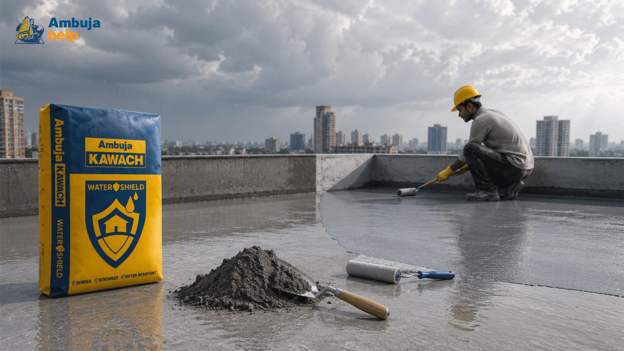
Ambuja Kawach from Ambuja Cement checks these boxes. It's engineered with SPE technology, works across all major applications, and is built specifically to withstand Indian weather conditions.
For homeowners looking for a reliable cement brand that takes waterproofing seriously, it's the end of your searching. Plus, Ambuja Kawach can be used for foundations, slabs, and walls, making it a practical single-product solution rather than a patchwork of different materials.
The Bottom Line
The ending is clear: waterproofing is non-negotiable for homes. For Indian homeowners, using water-repellent cement is one of the best ways to ensure that a home is protected against damage caused by seepage, dampness, and erosion.
That’s why understanding what it is and how it works puts you in a much better position, so that you only buy the best water repellent cement available in the market. Ask the right questions early, and you'll save yourself significant stress and money down the line.
Frequently Asked Questions
Q.1 How effective is waterproof cement for roofing?
Waterproof cement like Ambuja Cement Kawach is highly effective for roofing. It reduces water absorption, prevents seepage, and minimizes cracks caused by thermal stress. Its advanced formulation creates a dense, water-resistant layer, making it ideal for Indian monsoons where roofs face continuous exposure to heavy rainfall.
Q.2 Which cement brands are top-rated in India?
Top-rated cement brands in India include Ambuja Cement, known for innovations like Kawach with SPE technology. It stands out for durability, water resistance, and consistent performance across climates. Choosing a trusted brand ensures better structural strength, long-term protection, and reduced maintenance costs for homeowners.
Q.3 What is the cement bag price in India?
Cement bag prices in India typically range between ₹350 and ₹450, depending on brand, type, and region. Premium waterproof variants from Ambuja Cement may be slightly higher, but they offer added value through durability, reduced repair costs, and enhanced resistance to water-related damage over time.
Q.4 How much does Ambuja Cement cost per bag in India?
A bag of Ambuja Cement generally costs between ₹380 and ₹450, depending on location and variant like Kawach. While pricing may vary, its integrated waterproofing benefits and long-term durability make it a cost-effective choice compared to standard cement that may require additional waterproofing treatments later.
Q.5 Why should homeowners choose Ambuja Kawach for waterproofing?
Ambuja Cement Kawach is engineered specifically for Indian conditions with SPE technology that enhances density and water resistance. It works across foundations, slabs, and walls, reducing seepage risks. This all-in-one approach simplifies construction while ensuring long-term protection against dampness, cracks, and structural damage.