Summer Cracks to Monsoon Leaks: How Waterproof Cement Keeps A Home Strong All Year Round


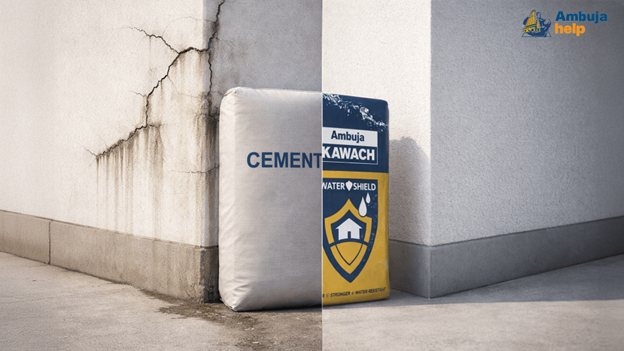
Table of Content
India's climate needs waterproof cement for many reasons for its buildings. In summer, heat expands walls, causing fine cracks to develop. Come monsoon, those same cracks lead to dampness, seepage, mould, and eventually, structural damage. And by winter, the freeze-thaw cycle in colder regions adds another layer of stress to already weakened buildings.
Most homeowners treat these as separate, seasonal problems. They're not. They're part of the same ongoing battle between your home and the elements, and the foundation of that battle is the cement used in construction.
What Exactly Is Waterproof Cement?
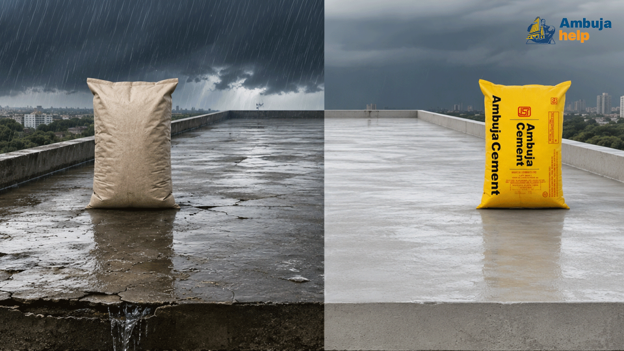
Waterproof cement is a specially formulated building cement that includes water-repellent additives during the manufacturing process. These additives create a barrier within the cement mixture, meaning water is actively repelled rather than absorbed into the material.
Traditional cement, by comparison, is porous. It absorbs moisture, and over time, that absorbed water damages the building from within by corroding the rebars, causing cracks, encouraging mold, and peeling paint off the walls.
Waterproof cement works differently. It stays structurally sound even while exposed to severe damp climates for long durations, which makes it particularly valuable in a country like India, where buildings have to survive everything from peak summer heat to heavy monsoon downpours within the span of a few months.
The Seasonal Damage Most Homeowners Miss
Understanding why your home needs year-round protection starts with understanding what each season actually does to your walls, roof, and foundation.
| Season | What Happens to Your Home | Common Result |
|---|---|---|
| Summer | Heat causes walls to expand and contract | Hairline cracks in plaster and masonry |
| Pre-Monsoon | Dust and humidity settle into cracks | Cracks widen, entry points form |
| Monsoon | Rainwater seeps through walls, roof slabs, and foundations | Damp walls, ceiling leaks, mould growth |
| Post-Monsoon | Wet materials dry unevenly | Paint peeling, surface staining, corrosion of rebar |
| Winter | Cold causes further contraction in colder regions | Structural weakening over time |
Where Waterproof Cement Makes the Biggest Difference
Not every part of your home faces equal risk. Some areas are far more vulnerable to water damage and deserve special attention during construction or renovation.
| Area | Risk Level | Why It Matters |
|---|---|---|
| External walls | High | Constant exposure to rain and sun |
| Roof slab and ceiling | Very High | Direct rainwater contact is the highest leak risk |
| Basement and foundation | Very High | Groundwater seepage can damage structural stability |
| Bathrooms and kitchens | High | Daily moisture exposure, mould-prone surfaces |
| Boundary walls | Medium | Weathering, algae, and dampness over time |
Standard Cement vs. Waterproof Cement: The Real Comparison
Here is a side-by-side look at what you are actually choosing between:
| Feature | Waterproof Cement | Standard Cement |
|---|---|---|
| Water resistance | Repels moisture actively | Absorbs water readily |
| Durability | Resists cracking and corrosion | Weakens with moisture exposure |
| Maintenance requirement | Fewer repairs over time | Frequent patching and treatment |
| Long-term cost | Cost-effective despite slightly higher upfront cost | Lower upfront, but expensive to maintain |
| Best suited for | Moisture-exposed areas, all-weather construction | Dry, low-moisture applications |
When comparing standard to waterproof cement, cement bag prices often trip people up. Waterproof or all-weather cement variants may cost slightly more per bag than standard options. But when you account for the cost of repairing seepage damage, repainting damp walls, fixing foundation cracks, or dealing with mould every monsoon, the math shifts considerably. Over a five to ten-year horizon, water-resistant cement is almost always the more economical choice.
Practical Tips for Using Waterproof Cement Effectively
- Mix ratios matter. Follow Ambuja’s recommended water-to-cement ratio precisely. Adding too much water to the mix actually reduces the cement's density and compromises its water-resistant properties.
- Apply cement plaster as an additional layer. A properly applied cement plaster coat over the base structure adds another level of water-repellent protection, particularly on external walls.
- Seal cracks before they grow. Even the best cement needs clean surfaces to bond to. Fill any existing hairline cracks before applying a new layer, especially ahead of monsoon season.
- Do not skip curing. Proper curing, keeping the cement surface moist for the recommended period after application, is essential for it to reach its designed strength and water resistance.
- Inspect annually. A quick inspection before monsoon season can identify vulnerable patches before they become expensive repairs.
How to Choose Among Cement Brands for Water Resistance
| What to Check | Why It Matters |
|---|---|
| Compressive strength rating | Higher strength generally means greater durability under stress |
| Water permeability rating | Lower permeability = better resistance to seepage |
| BIS certification | Ensures the product meets Indian quality standards |
| Brand's track record | Established manufacturers with consistent quality control |
| Product-specific formulation | All-weather or waterproof variants outperform general-purpose cement |
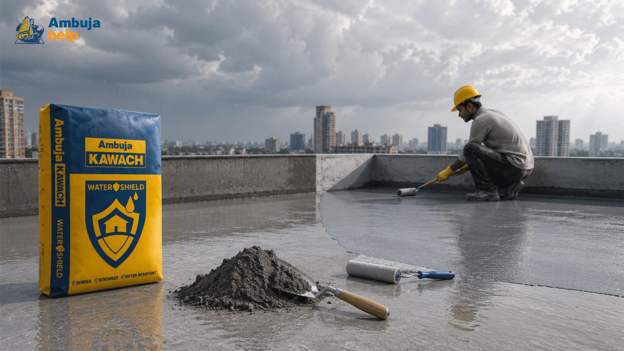
Ambuja Cement's Kawach is one of India’s top water-resistant cement solutions made specifically for the Indian climate. Designed specifically for all-weather performance, it addresses the kind of year-round stress that Indian homes face.
Where to Start
If you are building a new home, include water-repellent cement in your cement requirements for all external walls, the roof slab, the foundation, and wet areas like bathrooms and kitchens. If you are renovating, identify the areas most affected by seasonal damage and prioritise those.
The cement bag price conversation is worth having with your contractor, but frame it correctly. The question is not which cement is cheapest per bag. The question is which cement protects your home most effectively over the years you plan to live in it. That is the number that actually matters.
FAQ’s
Q.1 How effective is waterproof cement for roofing?
Waterproof cement is highly effective for roofing as it actively repels water instead of absorbing it. This reduces the risk of seepage, leaks, and long-term structural damage. It is especially useful in Indian climates, where heavy monsoons and heat cycles can weaken traditional cement over time.
Q.2 Which cement brands are top-rated in India?
Top-rated cement brands in India are those known for durability, consistency, and certified quality. Ambuja Cement is widely trusted by contractors for its performance and specialised products suited to different construction needs.
Q.3 What is the cement bag price in India?
Cement bag prices in India typically range between ₹300 and ₹450, depending on the brand, type, and location. Waterproof or premium variants may cost slightly more. However, the higher upfront cost is often offset by reduced maintenance and repair expenses over time, especially in moisture-prone areas.
Q.4 How much does Ambuja Cement cost per bag in India?
The price of Ambuja Cement generally falls between ₹350 and ₹450 per bag, depending on the variant and region. Specialised products like waterproof or high-performance cement may be priced slightly higher due to their enhanced durability, strength, and resistance to seepage and environmental stress.
Q.5 Where should waterproof cement be used in a home?
Waterproof cement should be prioritised in areas exposed to constant moisture or weather changes. These include roof slabs, external walls, basements, bathrooms, and kitchens. Using it in these zones helps prevent seepage, mould growth, and structural damage, ensuring better long-term durability and lower maintenance costs.