Sustainable Construction Materials: How Eco-Friendly Cement Choices Lower Home Costs


Table of Content
As climate change and the housing crisis continue to shape global conversations, the way we build our homes is undergoing an important transformation. People today are looking for affordable houses that last longer, are easier to maintain and have a smaller impact on the environment. This is where sustainable construction materials step in as a practical solution rather than just a buzzword.
Sustainability in construction doesn’t mean compromising on strength or quality of the construction material or the labour used, but when balanced correctly, eco-friendly materials can reduce construction costs, lower energy bills, and create healthier living spaces.
Why Eco-Friendly Choices Matter in Home Construction
Affordable housing is about more than building cheaply. An affordable home remains strong, comfortable, and economical to live in for decades. Traditional construction materials mean high energy consumption during manufacturing and transport, which adds to both environmental and financial costs.
Eco-conscious alternatives focus on:
- Reducing carbon emissions
- Improving thermal performance
- Lowering long-term repair and maintenance expenses
- Creating healthier indoor environments
These benefits are especially valuable for homeowners looking to manage rising maintenance costs over time.
What Makes a Building Material Sustainable?
A material is considered eco-friendly when it reduces environmental impact without sacrificing performance. Here are some of the key factors that define sustainability in construction:
| Feature | Why It Matters |
|---|---|
| Renewability | Materials that regenerate quickly reduce resource depletion |
| Recycled Content | Reuse lowers waste and saves raw materials |
| Low Embodied Energy | Less energy used in manufacturing means lower emissions |
| Indoor Health | Non-toxic materials improve air quality |
Modern cement formulas that blend industrial by-products, such as fly ash, help reduce the overall carbon footprint while improving durability and workability.
Materials Changing the Face of Affordable Housing
Several innovative materials are already proving that sustainability and affordability can go hand in hand.
Bamboo
Bamboo grows quickly and offers impressive strength. Its flexibility and durability make it suitable for floors, partitions and structural elements, especially in regions with warm climates.
Compressed Earth Blocks (CEBs)
Made from locally available soil, CEBs are cost-effective, thermally efficient, and reduce transportation costs. Homes built with these blocks stay cooler in hot weather and warmer during colder months.
Recycled Plastic and Rubber
Waste plastics and rubber can be transformed into bricks, tiles, and insulation materials. These products are resistant to moisture and pests, while also helping reduce landfill waste.
Hempcrete
Hempcrete is lightweight, breathable, and naturally insulating. It also absorbs carbon dioxide over its lifespan, making it an environmentally positive building option.
How Cement Fits Into Sustainable Construction
While alternative materials are gaining popularity, cement remains important for a building’s durability. The key lies in choosing cement that balances performance while being eco-friendly.
Blended cements, such as PPC (Portland Pozzolana Cement), use supplementary materials that reduce clinker content, lowering emissions while improving strength. High-quality cement improves bonding, reduces cracking, and increases the lifespan of structures, which directly translates to long-term savings.
This is where Ambuja Cement comes into the picture with premium products guaranteeing consistent quality and dependable performance. Ambuja’s cement products support modern construction methods that prioritise strength alongside sustainability.
How Sustainable Materials Reduce Overall Home Costs
Eco-friendly construction isn’t just good for the planet; it’s good for your wallet, too.
| Cost Area | How Sustainability Helps |
|---|---|
| Construction | Local and recycled materials reduce transport costs |
| Energy Bills | Better insulation lowers heating and cooling expenses |
| Maintenance | Durable materials reduce repairs over time |
| Health Costs | Improved air quality supports better well-being |
Homes built using environmentally friendly materials have better thermal insulation and heat resistance, helping families save on electricity bills year after year.
Healthier Homes, Stronger Communities
Materials that avoid toxic chemicals and improve ventilation contribute to healthier indoor environments. This reduces the risk of respiratory problems and creates a safer living space.
Beyond individual homes, sustainable construction supports:
- Local employment through material sourcing and production
- Reduced environmental strain on surrounding areas
- Greater resilience against heatwaves, flooding, and moisture damage
Communities that adopt these practices often see improved quality of life and long-term economic stability.
Blending Innovation With Reliability
Sustainable housing doesn’t mean abandoning traditionally used materials. Instead, it’s about using smarter combinations, natural materials supported by high-performance cement and modern construction techniques. Fly ash-based cement, improved curing methods, and efficient mix designs allow homes to be both environmentally responsible and structurally sound.
Ambuja Cement, with its focus on quality and innovation, fits naturally into this approach by supporting builders and homeowners who want reliable strength without unnecessary environmental impact.
Final Thoughts
The future of housing lies in thoughtful choices. Eco-friendly materials, when paired with reliable cement and smart design, prove that sustainability and affordability are complementary solutions to modern housing challenges.
By choosing materials that reduce environmental harm, lower long-term costs, and create healthier homes, homeowners and builders can play a meaningful role in shaping resilient communities.
FAQ’s
Q.1 How does the home construction process work?
Home construction starts with planning and design, followed by foundation work, structural construction, masonry, finishing, and curing. Using durable, eco-friendly materials and reliable cement like Ambuja Cement ensures smoother execution, reduced rework, and long-lasting homes.
Q.2 Which building construction materials are most durable?
Durable materials include high-quality cement, reinforced steel, concrete blocks, well-fired bricks, and sustainable composites. Products made with Ambuja Cement enhance bonding, strength, and resistance to weather, ensuring structures last longer with minimal maintenance.
Q.3 How is building construction cost estimated?
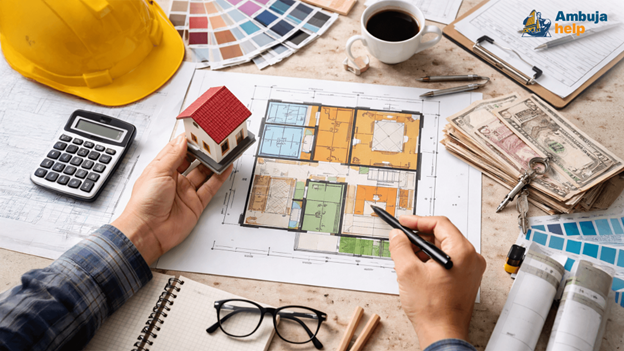
Construction cost is estimated using layout drawings, material quantities, labour rates, and finish choices. Sustainable planning and consistent materials like Ambuja Cement help control waste, improve accuracy, and reduce long-term maintenance expenses.
Q.4 What are essential building materials for house construction?
Essential materials include cement, steel, sand, aggregates, bricks or blocks, roofing materials, and finishes. Choosing eco-friendly, high-quality cement supports strong, durable, and sustainable residential construction.