Types of Bricks Used in Indian Homes: Which One Works Best For Your Home?


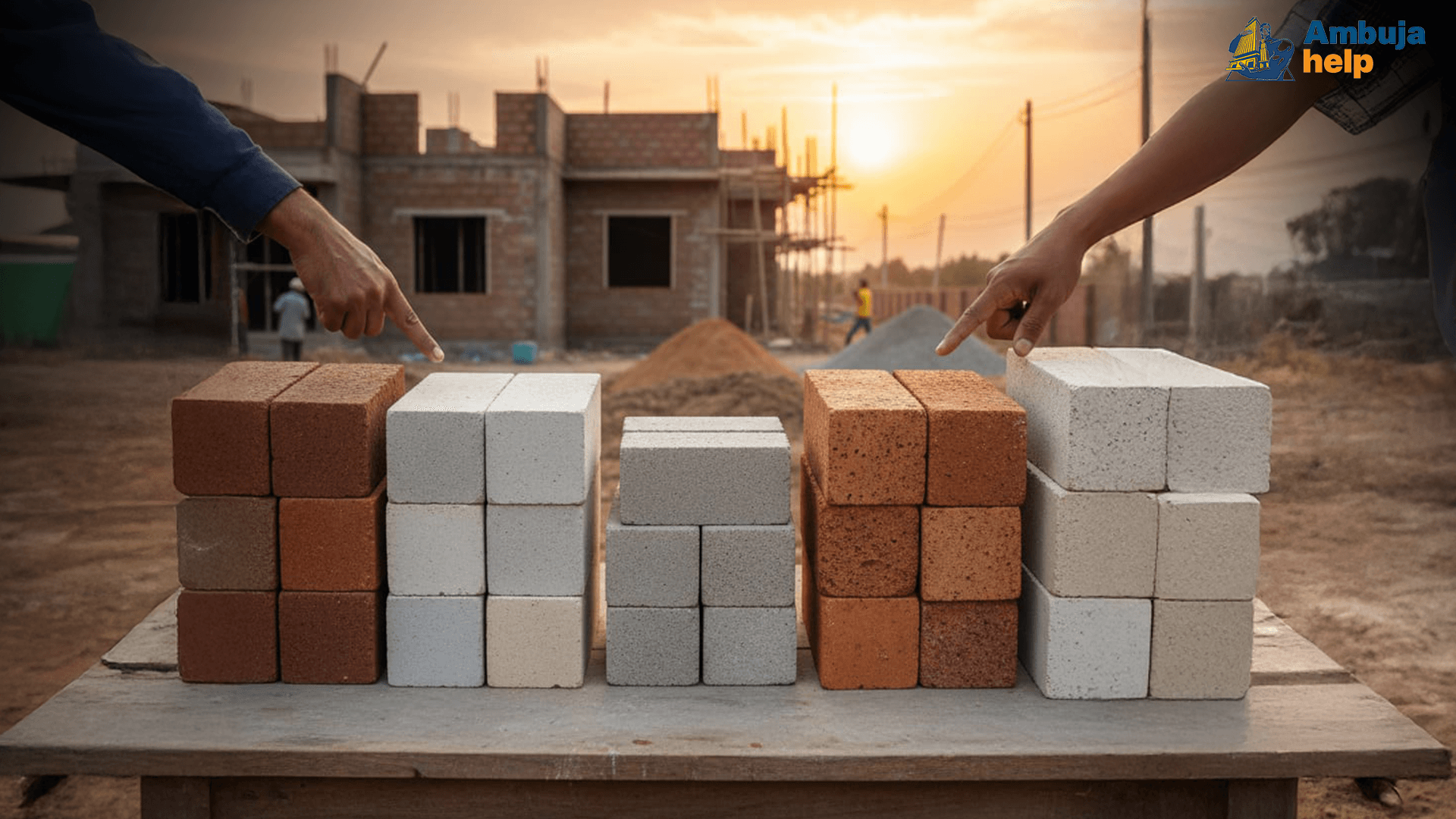
Table of Content
Bricks have been one of the most important variables in every Indian home construction for centuries. From old havelis to modern villas, they continue to shape the homes we live in. Yet, with so many types of bricks available today, choosing the right one is confusing, especially if you’re building your own home for the first time.
Each brick has its own strengths, limitations, and best use. Understanding these differences helps you build a stronger, more durable home while making smarter choices about cost, comfort, and sustainability. Let’s explore the most commonly used bricks in Indian homes and figure out which one works best for your needs.
What Are Bricks and Why Are They Still Popular?
Bricks are rectangular units traditionally made from clay, concrete, sand, lime, or industrial by-products like fly ash. They are widely used to construct walls, pavements, and partitions because they are strong, fire-resistant, and long-lasting.
Given the extreme Indian weather conditions, including heat, monsoons, and diverse soil types, it's safe to say that bricks remain one of the most reliable building materials for residential construction.
Common Types of Bricks Used in Indian Homes
Below is a simple overview of popular brick types and where they are commonly used:
| Type of Brick | Key Features | Common Uses |
|---|---|---|
| Sun-dried bricks | Low cost, low strength | Temporary structures |
| Burnt clay bricks | Strong, durable | Load-bearing walls |
| Fly ash bricks | Eco-friendly, uniform | Residential & commercial buildings |
| Concrete bricks | High strength, weather-resistant | Structural and paving work |
| Engineering bricks | Dense, water-resistant | Foundations, damp-proof courses |
| Calcium silicate bricks | Lightweight, good insulation | High-rise buildings |
| ACC blocks | Lightweight, fast construction | Homes and commercial buildings |
A Closer Look at Brick Options
1. Sun-Dried Bricks
These are made by drying clay bricks in the sun without firing. They are economical but weak and not weather-resistant. They are mainly used for temporary or low-cost rural homes and are not suitable for permanent homes.
2. Burnt Clay Bricks
This is the most traditional choice for Indian houses. Fired in kilns, these bricks are strong, durable, and widely available.
Burnt clay bricks are further classified into:
- First-class bricks: High quality, uniform shape, suitable for load-bearing and exposed walls
- Second-class bricks: Minor imperfections, used for plastered walls
- Third-class bricks: Poor quality, used for non-structural work
- Fourth-class bricks: Over-burnt or under-burnt, unsuitable for construction
For a strong and reliable brick wall, first- or second-class burnt clay bricks are commonly used.
3. Fly Ash Bricks
Made using fly ash (a by-product of thermal power plants), cement, and water, these bricks are eco-friendly and uniform in size. They absorb less water, reduce plaster consumption, and are increasingly popular in modern Indian homes.
4. Concrete Bricks
Concrete bricks are made from cement, sand, and aggregates. They are strong, weather-resistant, and ideal for humid areas or structures that are exposed to moisture. Their uniform shape improves construction speed and finish quality.
5. Engineering Bricks
These bricks are fired at very high temperatures, making them extremely dense and strong. They offer excellent resistance to water and chemicals and are commonly used in foundations and areas where moisture resistance is important.
6. Calcium Silicate Bricks
Made from sand and lime, these bricks are known for their smooth finish, good insulation, and fire resistance. They are lightweight and suitable for high-rise buildings, but less common in standalone homes.
7. ACC Blocks and Concrete Blocks
Lightweight blocks such as ACC blocks are gaining popularity due to faster construction, better thermal insulation, and reduced structural load. They are especially useful in city homes and multi-storey buildings.
Key Properties to Check Before Choosing Bricks
Not all bricks hold up the same way. Here are some important properties to keep in mind:
| Property | Why It Matters |
|---|---|
| Compressive strength | Determines load-bearing capacity |
| Water absorption | Lower absorption means better durability |
| Hardness | Indicates resistance to wear and tear |
| Thermal conductivity | Affects indoor temperature |
| Efflorescence | Excess salts can damage plaster and finish |
| Alkali resistance | Prevents long-term deterioration |
Testing bricks for compressive strength and water absorption helps to make sure that they are suitable for long-term use.
How to Identify Good-Quality Bricks
You don’t need to be an expert to spot quality bricks. Here are a few simple checks:
- Shape and size: Uniform and sharp edges
- Colour: Even colour without patches
- Sound: A Clear ringing sound when two bricks are struck together
- Surface: Free from cracks and excessive powder
Choosing the Right Brick for Your Home
There’s no single “best” brick; it depends on your home design, climate, and budget. Burnt clay and fly ash bricks remain popular for traditional homes, while concrete blocks and ACC blocks are becoming more popular for faster, modern construction.
Equally important is using high-quality cement and mortar. Premium materials from Ambuja Cement play a crucial role in ensuring strong bonding, long-lasting walls, and consistent construction quality.
For homeowners looking for advanced solutions, Ambuja Cool Walls concrete blocks offer better heat resistance, reduced erosion, and faster construction, making them a smart alternative to conventional brickwork.
Final Thoughts
Bricks may look simple, but choosing the right ones makes a big difference to your home’s strength, comfort, and lifespan. Understanding different brick types, their properties, and applications helps you to make informed decisions rather than relying on guesswork.
When combined with quality cement, skilled workmanship, and thoughtful planning, the right bricks help you build a home that stands strong for generations, solid, comfortable, and truly your own.
FAQ’s
Q.1 Are concrete homes better than brick homes?
Homes made with concrete bricks are faster to build, have better structural strength and better heat resistance. With Ambuja Cool Walls, homeowners get durable walls, better thermal insulation and long-term performance compared to traditional brick homes.
Q.2 What are the benefits of using concrete bricks?
Concrete bricks provide high strength, uniform shape, and an excellent barrier against different weather conditions. They reduce construction time, improve finish quality, and stand better in humid conditions.
Q.3 What are the essential building materials for house construction?
Any house construction requires the key materials that include bricks or concrete blocks, cement, sand, aggregates, steel, and water. Using premium cement from Ambuja Cement ensures consistent strength and durability across every stage of home construction.
Q.4 What tasks are involved in building construction work?
A lot of stages are involved throughout the period of a construction project. Those include planning, foundation work, masonry, concrete work, plastering, finishing, and curing. Each stage becomes easier to plan and execute with high quality from brands like Ambuja Cement, ensuring strong, durable, and well-finished homes.