From Limestone to Cement Bag: How Cement Is Manufactured in India


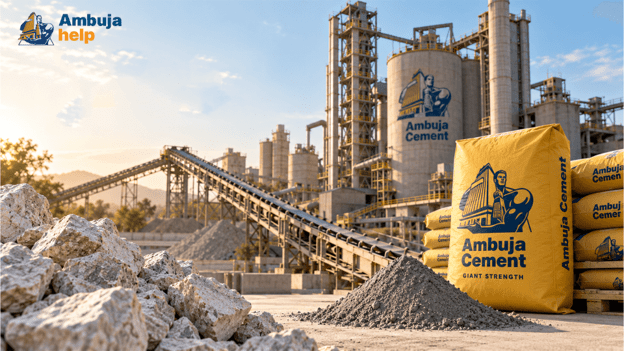
Table of Content
Cement is one of the core materials used in construction, from homes and offices to highways, bridges, and dams. But have you ever wondered what cement is and how limestone from a quarry becomes the fine powder packed into cement bags?
The process involves several carefully controlled stages, including crushing, grinding, heating, and quality testing. Understanding these steps helps builders and homeowners make informed choices when selecting cement for their construction needs.
1. Raw Material Extraction: Where Cement Manufacturing Begins
The cement manufacturing process starts with the extraction of raw materials from quarries. Limestone is the primary ingredient, while clay and other materials help achieve the required chemical composition.
- Limestone: Supplies calcium, which is essential for cement strength.
- Clay: Provides silica, alumina, and other important compounds.
- Iron ore and other additives: Help balance the raw mix, depending on the manufacturing requirements.
Each of these materials is selected as per its chemical properties, quality, and availability, which all have a direct impact on each manufacturing stage during construction. For a premium cement brand such as Ambuja Cement, the quality of raw materials is an important part of producing dependable cement.
2. Crushing and Grinding: Preparing the Raw Materials
Once limestone and other materials are extracted, they are transported to the crushing section of the plant. There, the large blocks are broken into smaller pieces, making them easier to process. The crushed materials are then refined further into a fine powder. This powder is called raw meal, which is then used and blended for kiln processing.
Modern equipment helps manufacturers control particle size and maintain a consistent material flow. Proper grinding also supports efficient heat transfer during the next stage. Every cement factory depends on reliable crushing and grinding systems to prepare raw materials for further processing. These operations also require regular equipment maintenance and dust control to support safe, efficient plant operations.
3. Raw Meal Preparation: Getting the Mix Right
Crushing and grinding alone are not enough to produce quality cement. The raw materials must be blended in carefully controlled proportions before entering the kiln. The raw meal's chemical composition influences clinker formation and the properties of the final cement. Manufacturers use laboratory testing and automated monitoring systems to check whether the mix meets the required specifications.
The process generally involves three key activities:
- Proportioning: Measuring limestone, clay, and other materials in suitable quantities.
- Blending: Mixing the materials to achieve a uniform composition.
- Quality testing: Checking chemical properties and making adjustments where necessary.
This stage is important because variations in the raw mix can affect kiln performance, clinker quality, and the consistency of the finished product.
4. Clinker Production: The Role of the Rotary Kiln
After preparation, the raw meal enters a preheater and, in many modern facilities, a precalciner before moving into the rotary kiln. Here, it is exposed to extremely high temperatures. At around 1,450°C in the clinker-burning zone, the materials undergo chemical reactions that produce clinker. These small, hard, grey nodules form the main ingredient used to manufacture cement.
One important reaction is calcination, during which limestone releases carbon dioxide and forms calcium oxide. Further reactions at high temperatures create the mineral compounds responsible for cement's binding properties.
The following table summarises the main stages involved in producing clinker.
| Stage | What happens | Why it matters |
|---|---|---|
| Preheating | Raw meal is heated using hot gases | Improves thermal efficiency |
| Calcination | Limestone releases carbon dioxide | Prepares materials for clinker formation |
| Kiln burning | Materials react at high temperatures | Forms clinker minerals |
| Cooling | Hot clinker is cooled rapidly | Helps preserve the required mineral structure |
Efficient kiln operation is essential for consistent clinker quality. Manufacturers also work to improve fuel efficiency, recover waste heat, and explore suitable alternative fuels to reduce the environmental impact of production.
5. Cement Grinding: Turning Clinker into Cement
Once the clinker has cooled, it is transported to the grinding section. Here, it is ground into a fine powder along with gypsum and, depending on the cement type, other suitable mineral components.
Gypsum plays an important role by regulating how quickly cement sets after water is added. Without proper setting-time control, cement may harden too quickly, making it difficult to handle during construction.
Different cement varieties are produced by adjusting the composition and proportions of their ingredients. Two widely used options are Ordinary Portland Cement (OPC) and Portland Pozzolana Cement (PPC).
| Cement type | Key characteristics | Common applications |
|---|---|---|
| OPC | High early strength development, depending on the grade | Structural concrete and projects requiring early strength |
| PPC | Contains pozzolanic materials and offers good workability | Residential construction, masonry, and plastering |
Ambuja Cement offers OPC and PPC options for different construction requirements. The appropriate choice depends on the application, design specifications, curing practices, and site conditions.
6. Quality Testing, Packing, and Dispatch
Before cement reaches construction sites, it undergoes quality checks to ensure that it meets applicable standards. These checks may include fineness, setting time, soundness, and compressive strength.
Once approved, cement is transferred to storage silos. Automated packing machines fill bags with the specified quantity, seal them, and prepare them for dispatch. Bulk cement may also be supplied directly to large construction projects.
Proper storage matters after delivery, too. Cement bags should be kept in a dry, covered area, raised above the floor and protected from moisture. This helps prevent premature hardening and preserves the material's usability.
When evaluating cement plants in India, it is useful to understand how raw material control, modern equipment, testing procedures, and storage practices contribute to consistent product quality.
7. Understanding Cement Before Choosing It
For homeowners and builders, knowing what cement is means being able to recognise the cement’s composition, grade, intended application, and handling conditions, which together influence the overall construction performance.
That's why when you search for “cement suppliers near me” consider the manufacturer’s product range, compliance with relevant Indian Standards, availability, and suitability for the project. A nearby supplier may simplify logistics, but the cement's quality and correct application remain essential.
Ambuja Cement is a premium source to consider when comparing cement options for residential and infrastructure projects. Selecting the right variant and following sound construction practices can help support durable, reliable structures.
Conclusion
From limestone extraction to the final cement bag, manufacturing involves a connected series of operations. Crushing, raw meal preparation, kiln processing, clinker grinding, and quality testing each contribute to the finished product. Understanding what cement is and how it is manufactured makes it easier to appreciate the role of raw materials, technology, and quality control in construction. With suitable cement selection, proper storage, and correct application, builders can create structures designed to meet their intended performance requirements.
Frequently Asked Questions
Q1. What are the main raw materials used to manufacture cement?
Limestone is the primary raw material, while clay, iron-bearing materials, and other additives help achieve the required chemical composition during cement manufacturing.
Q2. Why is a rotary kiln important in cement manufacturing?
A rotary kiln heats the prepared raw meal to high temperatures, allowing chemical reactions to take place and form clinker, the main ingredient used to manufacture cement.
Q3. What is the difference between OPC and PPC?
OPC is commonly selected for applications requiring strength development, while PPC contains pozzolanic materials and is valued for its workability and performance in suitable construction applications.
Q4. How do cement manufacturers maintain product quality?
Manufacturers monitor raw material composition, kiln conditions, clinker quality, grinding, and finished cement properties through laboratory testing and process controls.
Q5. How should cement bags be stored at a construction site?
Store cement bags in a dry, covered area, raised above the floor and protected from moisture. Proper storage helps prevent premature hardening and maintain usability.