Concrete Material Basics Every Contractor Should Know for Hassle-Free Construction


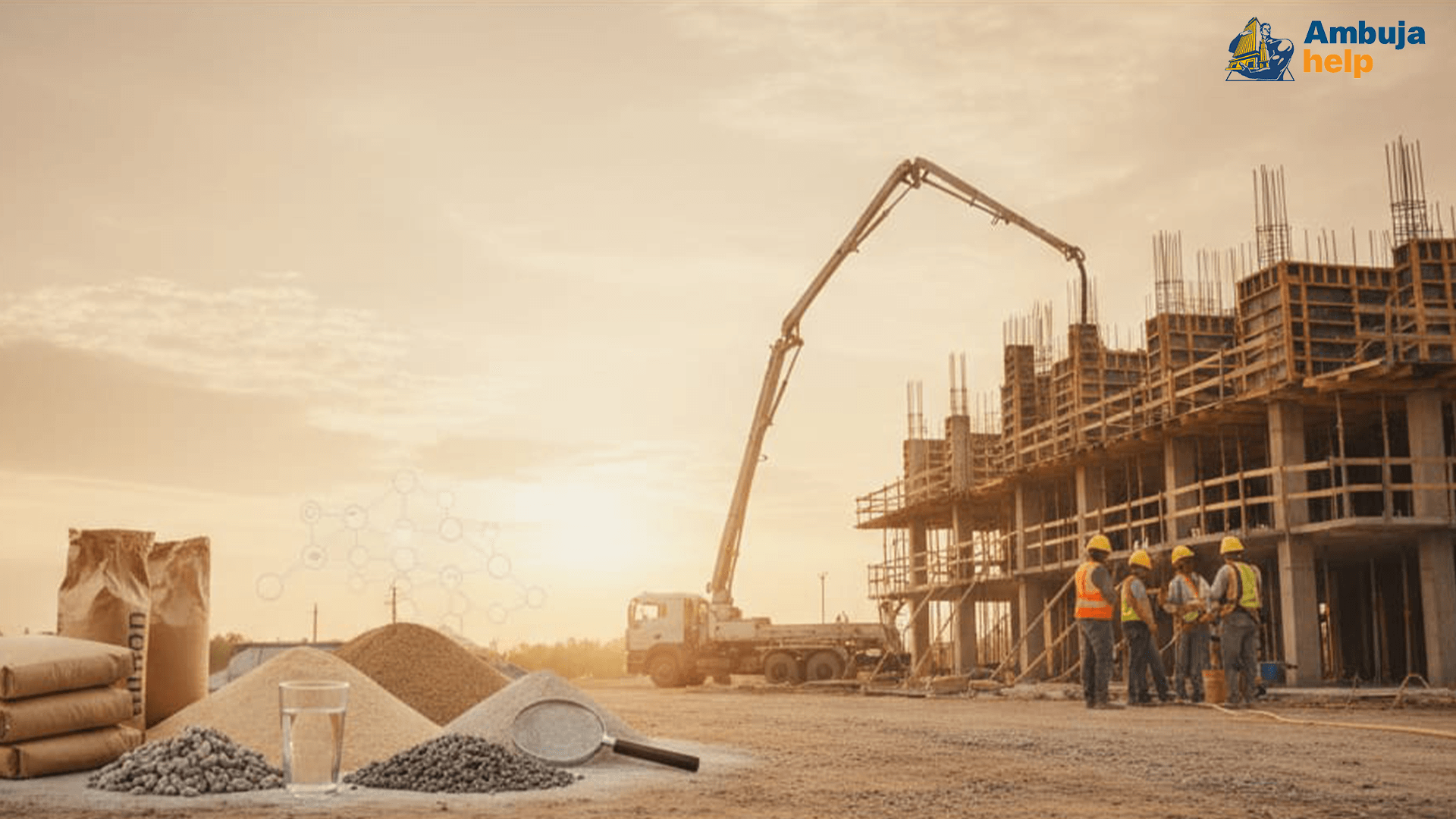
Table of Content
When you’re building a home or managing a construction project, there’s one element that is always a part of it: concrete. It supports your foundation, walls, slabs, and beams. In short, it helps all the other supporting elements, like bricks and steel bearing, to carry the weight of the building. Thus, understanding the basics of concrete material is not just for engineers; it's a must-have knowledge for every contractor and homeowner who wants a hassle-free construction with fewer surprises.
Getting concrete right from the start helps avoid cracks, leaks, and costly repairs later. Let’s break down what concrete really is, why it works so well, and how choosing the right type can make construction stress-free.
What Exactly Is Concrete?
Concrete is a carefully balanced mix of cement, water, and aggregates such as sand, gravel, or crushed stone. Once mixed, it can be poured into almost any shape. Over time, a chemical reaction between cement and water called hydration causes the mixture to harden into a strong, stone-like mass.
Its ability to adapt to different shapes, combined with durability and affordability, makes concrete the backbone of most construction projects, from independent houses to large commercial buildings.
Why Concrete Is So Widely Used
Concrete continues to be the most trusted building material for a reason. Here’s what makes it indispensable:
| Feature | Why It Matters |
|---|---|
| Strength & Durability | Handles heavy loads and harsh weather conditions |
| Fire Resistance | Does not burn, improving building safety |
| Low Maintenance | Requires minimal upkeep over decades |
| Design Flexibility | Can be moulded, textured, or finished in various ways |
When properly mixed and cured, concrete delivers dependable performance year after year.
Understanding the Core Ingredients of Concrete
Every concrete mix relies on three main components, each playing a vital role:
| Component | Purpose |
|---|---|
| Cement | Acts as the binding agent |
| Aggregates | Provide bulk and strength |
| Water | Activates cement and enables hardening |
The water-to-cement ratio is important. Too much water makes the mix weak; too little makes it difficult to work with. Good quality concrete often contains additives like fly ash or plasticisers to improve durability, workability, or setting time.
This is where cement quality matters. High-performance cement ensures consistent strength, smoother finishing, and better long-term results.
Common Types of Concrete and Where They’re Used
Different construction needs call for different types of concrete. Choosing the right one improves both performance and longevity.
Reinforced Concrete
This type combines concrete with steel reinforcement to handle both compression and tension. It’s widely used for:
- Foundations
- Beams and columns
- Multi-storey buildings
Lightweight Concrete
By using lightweight aggregates, this concrete reduces structural load and is ideal for:
- Roof slabs
- Precast panels
- Renovation projects
High-Strength Concrete
Designed for heavy stress, this concrete offers compressive strength above 40 MPa and is commonly used in:
- Industrial floors
- High-rise buildings
- Bridges and dams
High-Performance Concrete
This goes beyond strength, offering improved durability, weather resistance, and workability, perfect for projects in extreme conditions.
Precast Concrete
Manufactured in controlled factories, precast concrete ensures consistent quality and faster construction timelines. It’s commonly used for:
- Staircases
- Wall panels
- Structural components
Cement Quality: The Hidden Factor Behind Strong Concrete
Even the best aggregates and skilled labour can’t compensate for poor cement. Cement determines how well concrete bonds, cures, and withstands moisture, load, and time. High-quality cement improves density, reduces cracks, and enhances resistance to seepage. This is why experienced contractors rely on premium quality cements that are known for consistency and innovation.
Portland Cement and Modern Construction
Traditional Portland cement began the groundwork for advanced construction concrete, but today’s construction benefits from improved blends that improve durability and ensure sustainability. Blended cements reduce heat of hydration, improve workability, and increase moisture resistance, making them ideal for long-term residential and commercial projects.
Common Mistakes Contractors Should Avoid
Even good materials can fail if the basics are ignored. Watch out for these common issues:
| Mistake | Impact |
|---|---|
| Excess water in the mix | Reduced strength and surface cracks |
| Poor curing | Shrinkage and early deterioration |
| Inconsistent batching | Uneven performance |
| Low-quality cement | Weak structure and seepage issues |
Why the Right Cement Makes Construction Hassle-Free
Using reliable cement reduces rework, speeds up construction, and improves overall finishing quality. Ambuja Cement’s advanced cement solutions are made to support smooth mixing, better strength development, and long-lasting performance, qualities that contractors value on busy sites.
Products like Ambuja Plus, Ambuja Compocem, and Ambuja Kawach are engineered to address common construction challenges such as leakage, durability, and thermal insulation without adding complexity to the process.
Final Thoughts
Concrete is a building material that helps form the backbone of the structure. Understanding the basics of concrete, choosing the right type for each use, and using dependable cement can make the difference between a problem-free build and one filled with repairs.
Construction is a one-time investment, and the materials you choose today will decide how your building performs tomorrow. With quality cement, informed decisions, and proper execution, you can ensure strength, safety, and peace of mind for years to come.
FAQ
Q.1 How to calculate concrete material quantity?
Concrete quantity is calculated by measuring volume (length × width × depth) and adjusting for mix ratio and wastage. Using consistent-quality cement ensures a predictable mix, accurate estimates, and reduced material loss on-site.
Q.2 How much does concrete cost per cubic meter?
Concrete cost per cubic meter depends on cement grade, mix design, aggregates, labour, and location. High-quality cement such as Ambuja may cost slightly more upfront but delivers better strength, durability, and lower long-term maintenance costs.
Q.3 What are common concrete products used in construction?
Common concrete products include RCC concrete, lightweight concrete, high-strength concrete, slabs, beams, columns, and blocks. Ambuja’s advanced cement solutions support consistent performance across all these concrete uses.
Q.4 How does concrete home construction work?
Concrete home construction involves preparing formwork, placing reinforcement, pouring concrete, compaction, curing, and finishing. Using reliable cement like Ambuja Cement ensures smooth workability, proper curing, and strong, durable structural components.
Q.5 What is Portland cement, and where is it used?
Portland cement is the basic binding material used to make concrete and mortar. It’s widely used in foundations, slabs, beams, columns, and masonry. Modern variants improve durability, workability, and moisture resistance.