Building Strong from the Ground Up: Deep Foundation Types and Benefits


Table of Content
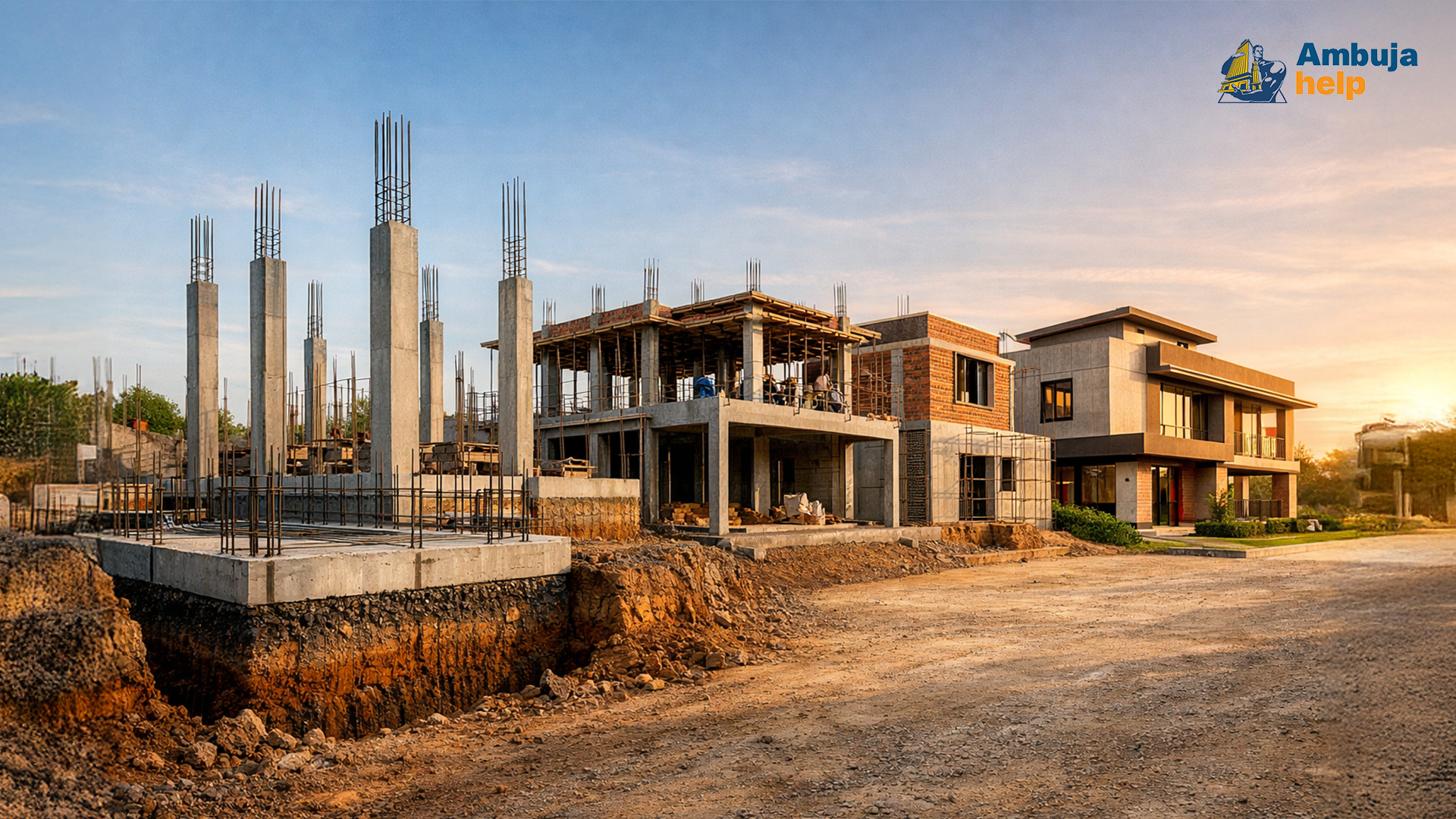
When it comes to house construction or large-scale building projects, strength doesn’t start right from the walls; it begins below the surface. The foundation is the invisible hero that ensures stability, durability, and long-term safety. Among different types, a deep foundation is often the go-to solution when building on weak soil or when a structure demands high load-bearing capacity.
In this blog, we’ll explore what a deep foundation is, the different types you should know about, its uses in modern construction, and the benefits it brings when paired with high-quality materials like Ambuja Cement.
What is a Deep Foundation?
A deep foundation is a type of foundation that extends far below the ground’s surface to reach stronger soil or rock strata. Instead of relying on shallow layers of earth, it transfers the load of a building down to depths where the ground is far more reliable.
Think of it as planting a tree: some plants thrive with shallow roots, but a giant banyan or oak needs roots that dig deep to anchor firmly against winds and storms. Similarly, skyscrapers, dams, bridges, and heavy buildings like bungalows need deep foundations for the strength to stand tall and withstand environmental pressures.
Even for house constructionon uneven terrain or flood-prone regions, opting for a deeper foundation can mean a more secure and long-lasting home.
Types of Deep Foundations
Different building challenges require different foundation strategies. Here are the major types of deep foundations and what makes each of them unique:
- Pile Foundation
Pile foundations are long, vertical columns of concrete or steel driven deep into the ground. They transfer the structure’s weight either directly onto firm soil or through friction along their sides.- Where it works best: Weak surface soils, coastal areas, or when a building is extremely tall.
- Why it matters: Distributes loads evenly and protects structures from shifting or sinking.
When paired with durable materials like Ambuja Cement, piles deliver both strength and longevity, ensuring peace of mind for builders.
- Caisson Foundation
Watertight boxes or cylinders sunk into the ground (or underwater) and filled with concrete.- Where it works best: High-water table zones, riverbeds, or coastal areas.
- Why it matters: Ideal for massive structures like bridges and piers where stability against water flow is critical.
Their durability depends heavily on high-quality cement, which is why engineers often trust Ambuja Cement for such demanding projects.
- Raft Foundation
Also called a mat foundation, this design looks like a giant “raft” of concrete spread beneath the entire building footprint. Instead of columns, the entire slab carries the structure’s load and spreads it evenly over a large area.- Where it works best: Poor or loose soil conditions.
- Why it matters: Provides uniform stability, especially for heavy industrial and commercial buildings.
It’s like giving your structure a broad, sturdy boat to float on.
- Basement Foundation
Basements extend the building deeper into the earth and distribute loads to deeper soil layers.- Where it works best: Urban house construction where space is tight, and extra utility rooms are a bonus.
- Why it matters: Adds usable space while also strengthening structural integrity.
- Shaft Foundation
Cylindrical columns drilled deep into the ground and filled with reinforced concrete.- Where it works best: High-rise buildings or projects requiring very high load capacity.
- Why it matters: Transfers loads directly into strong soil or rock layers below.
With Ambuja Cement, the result is a foundation that resists pressure, weather, and time.
Uses of Deep Foundations
Deep foundations are the base structures that not only carry the weight of the house, but also adapt to specific site conditions. They are most often used when:
- The soil has low load-bearing capacity.
- Large, heavy structures like high-rises, dams, and bridges are being built.
- Construction is planned in erosion-prone or flood-prone areas.
- Stability is critical against environmental factors like earthquakes or fluctuating water levels.
For constructing houses in challenging terrain, choosing a deep foundation can make the difference between a home that cracks under pressure and one that remains resilient for generations.
Benefits of Deep Foundations
Why go deep when building? Here are the big wins:
- Higher Load-Bearing Capacity
Deep foundations are designed for heavy-duty performance. They support tall skyscrapers and industrial projects, offering more capacity than shallow alternatives. - Stability in Weak Soils: Weak or shifting soils are no match for deep foundations. By bypassing fragile upper layers, they anchor the structure to stronger ground far below.
- Resistance to Uneven Settlement
Settlement issues can wreak havoc on buildings, causing cracks or tilting. Deep foundations minimize these risks by evenly distributing loads. - Adaptability to Site Conditions: From floodplains to sandy coasts, deep foundations offer solutions for almost any tricky condition. Whether it’s piles, caissons, or rafts, there’s a design suited to the challenge.
- Long-Term Durability
Deep foundations ensure that structures remain reliable and safe for decades. With the use of high-quality cement like Ambuja Cement, durability is further enhanced, making it a trusted choice for both engineers and homeowners.
Why Ambuja Cement Matters
A strong design is only as good as the materials used to bring it to life. Ambuja Cement is trusted across India for its quality, consistency, and ability to adapt to modern construction needs. Whether you’re building a high-rise, a bridge, or even a vastu-compliant home, choosing the right cement ensures your foundation stays strong.
In the world of mega constructions, where every detail counts, Ambuja’s eco-friendly and durable cement ensures that even deep foundations stand the test of time.
Final Thoughts
Building strong doesn’t just happen above ground; it begins below the surface. Understanding deep foundation types and benefits helps architects, engineers, and homeowners choose smarter, safer designs. From pile foundations to basements, each has a role to play in ensuring strength, stability, and durability.
With Ambuja Cement as your construction partner, you’re building structures and creating legacies that stand tall and last long. Because at the end of the day, a strong foundation isn’t just about concrete and steel, it’s about trust, planning, and the promise of safety.