Best Cement for Roofing Work: OPC vs PPC Explained


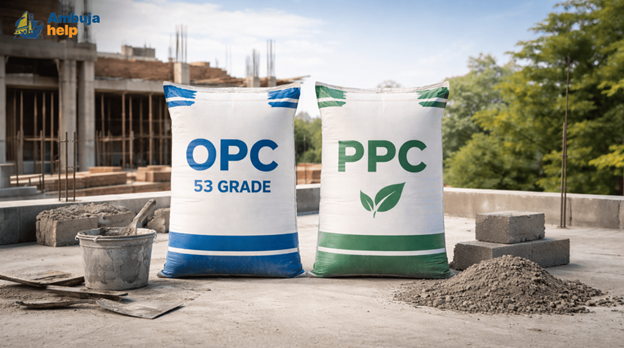
Table of Content
Look at any home, and it’s clear that out of all parts of the house, it’s the roof that bears the most punishment. It bears the weight of everything above - water tanks, solar panels, the occasional terrace gathering, while also battling Indian weather.
This is why choosing the right cement for roofing needs careful thought while making a purchase. The wrong type can lead to cracking, cause water to seep in, and cause serious damage to the building, which is expensive to fix. For this purpose, two cement types mainly stand out: OPC and PPC. Understanding how they differ will help you make a confident, informed decision.
Why the Roof Slab Demands a Specific Cement Choice
Not all parts of a building have the same requirements. A foundation needs strength and moisture resistance. A plastered wall needs workability and finish. Similarly, a roof slab needs a combination of things that make the cement suitable for it:
- High compressive strength to bear imposed loads
- Low heat of hydration to prevent thermal cracking during curing in large pours
- Durability against repeated wetting and drying cycles
- Resistance to water penetration, since the roof is the first line of defence against rain
- Long-term strength development to ensure the slab doesn't weaken over the years
With these requirements in mind, let's look at how OPC and PPC perform.
What is OPC?
OPC stands for Ordinary Portland Cement. It is a high-grade cement that is available in India and is made by grinding clinker, gypsum, and other base materials to a fine powder.
Key characteristics of OPC cement:
- Gains strength quickly in the first 7 days
- Faster setting time
- Higher heat of hydration during curing
- Excellent compressive strength for structural applications
- Widely available across India
What is PPC?
PPC stands for Portland Pozzolana Cement. It is made by blending Portland cement clinker with pozzolanic materials like fly ash, volcanic ash, or calcined clay along with gypsum. The pozzolanic materials bond with the cement over time to give long-term strength and durability.
Key characteristics of PPC:
- Slightly lower early strength than OPC, but superior long-term strength
- Lower heat of hydration, which is important for large concrete pours like roof slabs
- Better workability due to finer particle size
- Enhanced resistance to chemical attack and moisture
- More cost-effective than OPC 53 in most markets
OPC 53 vs PPC for Roofing: A Direct Comparison
| Criteria | OPC | PPC |
|---|---|---|
| Early Strength (7 days) | High | Moderate |
| Long-term Strength (90 days+) | Good | Matches or exceeds OPC |
| Heat of Hydration | Higher | Lower |
| Risk of Thermal Cracking | Higher in thick slabs | Lower |
| Workability | Moderate | Better |
| Water Resistance | Good | Better (due to pozzolanic reaction) |
| Cost | Higher | More economical |
| Environmental Impact | Higher carbon footprint | Lower (uses industrial waste materials) |
| Best For | Quick turnaround, high-strength structural work | Roof slabs, large pours, long-term durability |
Which One is Better for Roof Slabs?
For most standard roof slabs, PPC is the preferred choice among engineers and for good reason:
-
Lower heat, fewer cracks
When concrete sets, it generates heat. OPC produces more heat, which can lead to small cracks in large roof slabs. PPC stays cooler, making it a safer choice for cement for roofing.
-
Stronger over time
OPC gains strength quickly, but PPC catches up and often becomes stronger in the long run.
-
Better protection from water
PPC creates a denser structure, which helps prevent water from seeping in. This makes it a reliable cement for roofing, especially in areas exposed to rain.
-
Easier to work with
PPC is smoother and easier to spread, helping workers create a more even, solid slab. This improves the overall quality when using cement for roofing.
When should you use OPC 53?
If you’re on a tight deadline and need the roof to gain strength quickly, OPC cement can be useful. It’s often chosen in fast-paced construction projects where speed matters.
The Waterproofing Question
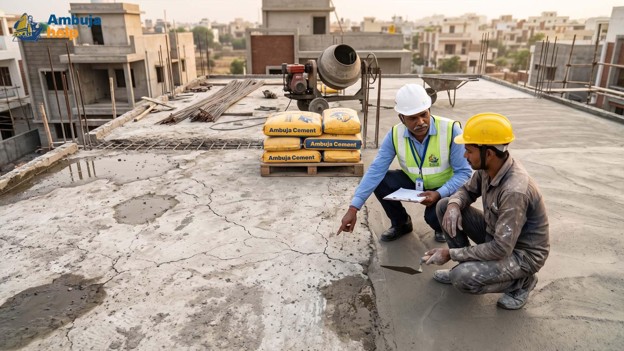
Any talk about roofing cement is incomplete without bringing in the question of waterproofing. Water seeping in has the potential to cause a lot of damage. To begin with, it can corrode the steel frame of the structure, which expands the steel, cracks the concrete, and progressively weakens the slab.
This is where the concept of waterproof cement comes in. PPC, by virtue of its denser properties, offers better water resistance than standard OPC. However, for roofs in regions with heavy rainfall or for flat terraces, choosing specialised waterproof cement is the best way to protect the roof and the building from water damage in the long run.
Getting the Full Picture on Roof Slab Materials
For homeowners looking at the best cement in India for their roof, the answer is lies in matching the cement type to the application:
| Application | Recommended Cement Type |
|---|---|
| Roof slab (structural) | PPC or OPC 43/53 based on the engineer's specification |
| Roof slab with waterproofing needs | PPC + waterproofing admixture or waterproof cement |
| Terrace screed and finishing | PPC |
| Coping and parapet walls | PPC or waterproof cement |
| Repairs and patches | Rapid-setting OPC or polymer-modified mortar |
Ambuja Cement addresses this requirement across its product range. For roof work, Ambuja's OPC and PPC variants offer the strength and reliability that Indian home builders need. For roofs that need additional protection against water seepage, Ambuja Kawach, a specially formulated cement engineered with SPE (Special Performance Enhancer) technology, provides superior water-repellent properties across all applications, including slabs, foundations, and walls.
Practical Tips for Roof Slab Construction
Regardless of which cement type you go for, these practices make a real difference in the quality of your roof slab:
-
Don't compromise on the water-cement ratio. Too much water weakens the slab and increases porosity. Follow the mix design your engineer recommends.
-
Cure properly and for the right duration. PPC in particular benefits from extended curing.
-
Ensure proper cover for reinforcement. Steel should have a proper concrete cover to protect it from moisture. The standard for roof slabs is typically 25–40mm, depending on exposure conditions.
-
Avoid construction in extreme heat. Pouring concrete in peak afternoon temperatures during summer accelerates water evaporation and can compromise strength development. Early morning pours are better.
-
Use a slope. Even "flat" roofs should have a slight gradient to drain water. Ponding water is one of the biggest contributors to long-term waterproofing failure.
Final Thoughts
For most residential roof slabs, PPC is the more sensible choice with its better workability, lower cracking risk, superior long-term strength, and improved resistance to moisture. OPC cement has its place where speed of strength gain is a priority, but for typical home construction, the long-term benefits of PPC are hard to argue against.
Add a dedicated waterproofing layer with waterproof cement formulation for exposed terraces, and your roof stands a much better chance of performing trouble-free for the decades it needs to.
Frequently Asked Questions
Q.1 How effective is waterproof cement for roofing?
Waterproof cement is highly effective in preventing seepage, dampness, and long-term structural damage. Ambuja Cement Kawach, with SPE technology, enhances water resistance by reducing porosity. It creates a protective barrier, making it ideal for Indian roofs exposed to heavy monsoons and fluctuating weather conditions.
Q.2 Which cement is best for roofing work?
For most roof slabs, PPC is preferred due to lower heat of hydration and better long-term durability. Ambuja Cement offers both PPC and OPC variants, allowing flexibility based on project needs, while ensuring reliable strength, workability, and performance suited to Indian residential construction.
Q.3 Is PPC better than OPC for roof slabs?
Yes, PPC is generally better for roof slabs because it reduces cracking risk and improves water resistance over time. Ambuja Cement PPC provides superior workability and durability, making it a dependable choice for homeowners looking to build roofs that last through India’s harsh weather cycles.
Q.4 When should OPC cement be used for roofing?
OPC cement is useful when early strength gain is required, such as in fast-track construction projects. Ambuja Cement OPC variants deliver high initial strength, making them suitable where quick formwork removal is needed, while still maintaining structural reliability in roofing applications.
Q.5 How can homeowners ensure long-lasting roof slabs?
Along with choosing the right cement, proper curing, mix ratio, and waterproofing are essential. Ambuja Cement solutions provide consistent quality across applications, helping reduce cracks, improve durability, and protect roofs from water damage, ensuring long-term performance with minimal maintenance.