Concrete Mixer Machine Types: Which One Is Right for Home Construction?


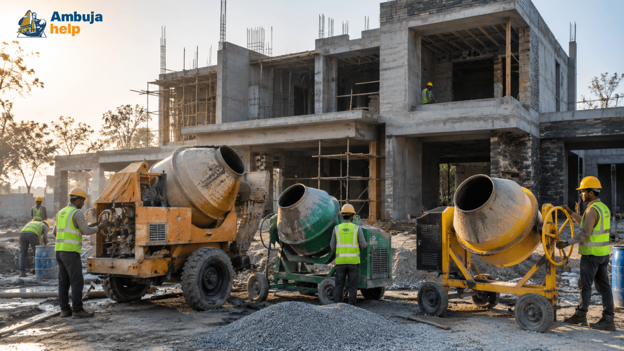
Table of Content
When building a home, every construction decision matters. From selecting quality cement to choosing the right equipment, each step contributes to the strength and durability of the structure. One important piece of equipment that often goes unnoticed is the concrete mixer machine.
This construction machine plays a critical role in ensuring that concrete is mixed uniformly and performs as expected. Whether you are constructing a new house or planning a renovation, understanding the different types of mixers can help you make better decisions for your project.
What Is a Concrete Mixer Machine?
A concrete mixer machine is a construction device used to combine cement, water, sand, aggregates, and other materials into a consistent concrete mix. Instead of mixing manually, these machines make the process simpler by helping save time, reduce labour, and improve the quality of concrete.
Uniform mixing is essential because poorly mixed concrete can lead to weak spots, cracks, and reduced durability. This is why professional builders and contractors rely on modern concrete mixers for construction projects of all sizes.
Why Is Choosing the Right Mixer Important?
The quality of concrete depends not only on the materials used but also on how well they are mixed. Even premium cement can underperform if the mixing process is inconsistent.
Some key benefits of using the right mixer include:
- Consistent concrete quality
- Reduced material wastage
- Faster construction timelines
- Better structural strength
- Improved worksite efficiency
When paired with high-quality cement products from trusted manufacturers like Ambuja, proper mixing can help achieve stronger and more durable structures.
Main Types of Concrete Mixers
Broadly, mixers are classified into two categories:
| Mixer Type | Best For | Output Capacity |
|---|---|---|
| Batch Mixers | Small to medium construction projects | Concrete is prepared in batches |
| Continuous Mixers | Large-scale projects with continuous demand | Continuous concrete production |
Let us explore these categories in detail.
1. Batch Mixers
Batch mixers prepare a fixed quantity of concrete at a time. They are widely used for residential construction because they offer good control over mix proportions.
Types of Batch Mixers
| Type | Key Feature | Suitable For |
|---|---|---|
| Drum Mixer | Rotating drum mixes materials | Residential and commercial projects |
| Pan Mixer | Circular mixing pan provides uniform mixing | Precision mixing applications |
Drum Mixers
Drum mixers are among the most commonly used concrete mixers in home construction. They consist of a rotating drum fitted with blades that continuously blend materials.
Their advantages include:
- Easy operation
- Faster mixing
- Lower labour requirements
- Suitable for various concrete grades
Drum mixers are further divided into three categories.
a) Tilting Drum Mixer
A tilting drum mixer allows the drum to tilt for easy discharge of mixed concrete.
Advantages:
- Quick unloading
- Reduced manual effort
- Suitable for small and medium projects
b) Non-Tilting Drum Mixer
In this type, the drum remains fixed while the concrete is discharged manually.
Advantages:
- Simple design
- Lower maintenance
- Cost-effective solution
Limitation:
- Requires more manual handling during unloading
c) Reversing Drum Mixer
A reversing drum mixer rotates in both directions. One direction is used for mixing, while the reverse direction helps discharge the material.
Advantages:
- Produces highly uniform concrete
- Suitable for wet and dry mixes
- Excellent mixing quality
Limitation:
- Higher equipment cost
2. Pan Mixers
Pan mixers use a circular mixing pan with rotating blades that blend materials thoroughly. These mixers are known for producing highly consistent concrete and mortar mixes.
Advantages of Pan Mixers
- Superior mixing quality
- Suitable for specialised applications
- Can mix concrete, mortar, and plaster
Limitations
- Lower capacity than large drum mixers
- Better suited for controlled mixing environments
For projects that require precision and consistency, pan mixers are often preferred.
3. Continuous Mixers
Unlike batch mixers, continuous mixers produce concrete without a break. Materials are continuously fed into one end of the machine while mixed concrete is discharged from the other. These mixers are typically used for:
- Large infrastructure projects
- Road construction
- Industrial developments
Benefits of Continuous Mixers
| Benefit | Description |
|---|---|
| High Output | Produces large volumes quickly |
| Time Efficient | Continuous operation reduces delays |
| Uniform Quality | Consistent mixing throughout production |
| Cost Effective | Suitable for high-volume applications |
For most residential projects, however, batch mixers remain the preferred choice due to their flexibility and ease of use.
How to Choose the Right Mixer for Home Construction
Selecting the ideal mixer depends on several factors.
Project Size
- Small homes: Tilting drum mixers work well.
- Medium residential projects: Reversing drum mixers offer better consistency.
- Large projects: Continuous mixers may be more efficient.
Concrete Volume
Estimate the amount of concrete required daily before selecting a machine.
Budget
While advanced mixers provide better performance, it is important to balance equipment costs with project requirements.
Quality Requirements
Projects involving structural elements such as foundations, beams, and slabs benefit from mixers that provide highly uniform concrete.
The Role of Cement Quality in Concrete Performance
Even the best mixer cannot compensate for poor-quality materials. The strength of concrete depends significantly on the quality of cement used. Ambuja Cement is widely trusted by homeowners and builders across India for its consistency and reliability. Its OPC and PPC variants are designed to deliver excellent strength, workability, and durability.
For projects requiring enhanced performance, Ambuja Plus offers additional benefits through its Special Performance Enhancer (SPE) technology. The product helps create stronger, denser concrete with improved resistance to leakage, making it suitable for a wide range of residential applications.
Conclusion
Choosing the right concrete mixer machine is an important step in ensuring successful home construction. Whether you opt for a drum mixer, pan mixer, or continuous mixer, selecting equipment that matches your project's needs can improve efficiency and concrete quality.
At the same time, high-quality construction materials remain equally important. When reliable mixing practices are combined with trusted cement solutions from Ambuja, homeowners can create structures that are strong, durable, and built to last for generations.
Frequently Asked Questions
Q1. What is the purpose of a concrete mixer machine?
A concrete mixer machine combines cement, water, sand, and aggregates into a uniform mixture, helping improve concrete quality, efficiency, and construction productivity.
Q2. Which mixer type is best for home construction?
Batch mixers, especially drum mixers, are commonly preferred for residential projects because they offer flexibility, consistent mixing, and ease of operation.
Q3. How do concrete mixers improve construction quality?
Concrete mixers ensure uniform mixing, reduce material wastage, and help achieve consistent concrete strength, all of which contribute to durable construction.
Q4. What is the difference between batch and continuous mixers?
Batch mixers prepare concrete in fixed quantities, while continuous mixers produce concrete without interruption, making them suitable for large-scale projects.
Q5. Why is cement quality important when using mixers?
Even with efficient mixing equipment, concrete performance depends on material quality. Ambuja Cement provides reliable strength and consistency for long-lasting construction outcomes.