Cement For Plastering: Why It’s Different From The Cement Used For Structure


Table of Content
When building a home, cement is used at multiple stages, starting from laying the foundation to finishing the walls. While it may feel like it’s the same material all across, the fact is that the cement used for structural work and plastering is very different. Structural elements require high strength and load-bearing capacity, whereas plastering focuses on finish, protection, and durability.
Understanding how a cement for plastering is different from cement used for building construction helps homeowners and builders achieve better surface quality, reduce cracks, and improve the overall strength of the structure.
What Is Cement Plaster and Why Does It Matter
Cement plaster is a thin layer of special mortar applied over walls and ceilings to create a smooth, even, and protective surface. It is typically made from a mixture of cement, sand, and water, sometimes enhanced with additives like lime or admixtures to improve workability.
Why Plastering is Important:
- It protects the underlying brick, stone, or RCC structure from moisture, weather, and environmental damage
- It evens out surface irregularities, covering poor workmanship or uneven masonry
- It creates a suitable base for painting, polishing, or decorative finishes
- It adds a layer of thermal insulation and minor soundproofing
In many older homes, plaster has played a crucial role in preserving the strength of the walls by preventing water seepage and slowing down deterioration. Without proper plastering, even strong buildings can weaken over time due to exposure.
How Cement for Plastering Differs from Structural Cement
Cement used for construction is designed to achieve high compressive strength and support heavy loads. It is used in beams, columns, slabs, and foundations where strength is the primary requirement. In contrast, plastering demands a completely different set of properties.
| Factor | Structural Cement Use | Plastering Cement Use |
|---|---|---|
| Primary Goal | Strength and load-bearing capacity | Smooth finish and surface protection |
| Workability | Moderate | High for easy spreading and finishing |
| Texture | Not critical | Fine and uniform |
| Crack Resistance | Important | Extremely critical for surface quality |
| Visibility | Hidden within the structure | Fully visible and aesthetic |
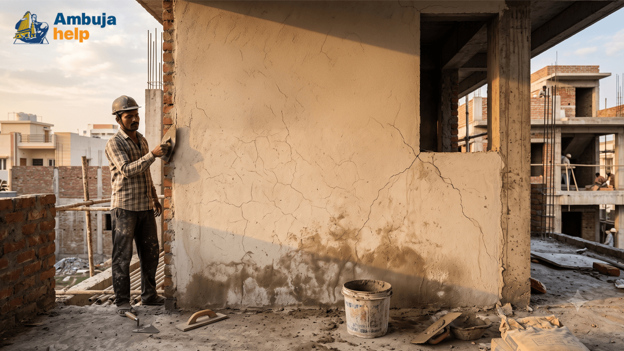
Using the wrong type of cement for plastering can lead to cracks, uneven surfaces, and poor finish quality, which is why understanding how the two differ becomes important.
Role of Cement Type in Plastering
The type of cement you choose directly affects how the plaster behaves during application and how it performs over time.
Common types used in construction:
Ordinary Portland Cement (OPC): OPC is widely used in construction because it gains strength quickly. However, its faster setting time can make plastering difficult, especially when large areas need to be finished smoothly. It is also more prone to cracks due to rapid shrinking if not handled carefully.
Portland Pozzolana Cement (PPC): PPC contains fly ash, which makes it finer and more workable. It has a slower setting time, allowing more flexibility during application. This makes it especially suitable for plastering.
Because of these properties, modern construction prefers PPC cement for plastering.
Why PPC Cement Is Better for Plastering
PPC cement offers several advantages that make it ideal for finishing applications.
Benefits:
- Improved workability: The finer particles make the mix smoother and easier to spread evenly across surfaces
- Reduced shrinkage cracks: Slower hydration reduces internal stress, minimising cracks after drying
- Lower permeability: It resists water penetration better, protecting walls from dampness
- Better finish quality: The extended setting time allows for more refined finishing
- Higher durability: Increased resistance to chemicals like sulfates and chlorides enhances long-term performance
These benefits ensure that plastered surfaces remain smooth, strong, and visually appealing for years.
Components of a Good Plaster Mix
A durable plaster depends not just on cement type but also on the quality and proportion of materials used.
Key components:
- Cement: Acts as the binding material
- Sand: Provides bulk and strength; must be clean and well-graded
- Water: Initiates the hydration process; should be free from impurities
- Additives: Improve workability and bonding
Important factors to consider:
- The commonly used ratio is 1:3 (cement to sand), but it may vary based on requirements
- Water content must be controlled carefully, because too much water weakens the mix, while too little affects workability
- Environmental conditions like temperature and humidity also influence the mix
A well-balanced mix ensures better adhesion, reduced cracking, and longer-lasting plaster.
Types of Cement Plaster Finishes
Plastering also contributes to the overall look of the building. Different finishes can be achieved depending on the technique used.
Common finishes:
Smooth Finish: Created using fine sand and proper troweling, this finish is widely used for both interiors and exteriors due to its clean and elegant appearance.
Roughcast Finish: Made using coarse aggregates, this finish is more textured and highly durable, making it suitable for exterior walls exposed to harsh weather.
Sand-Faced Finish: This finish provides a uniform, slightly rough texture that helps conceal minor cracks and improves resistance to water penetration.
Textured Finish: Decorative patterns are created using tools, adding aesthetic value to modern homes.
Number of Coats and Their Importance
Plastering can be done in multiple layers depending on the surface condition and desired finish.
Types of plaster coats:
- Single Coat: Used for relatively even surfaces, mainly indoors
- Double Coat: Provides additional thickness and improves durability
- Three-Coat System: Ideal for uneven surfaces and high-quality finishes, ensuring maximum smoothness
Each layer must be applied carefully to achieve the desired strength and finish.
Importance of Proper Curing in Plastering
Curing is one of the most critical steps in plastering, yet it is often overlooked. Proper curing ensures that the plaster achieves its full strength and remains crack-free.
Why curing matters:
- It allows proper hydration of cement
- Reduces shrinkage cracks
- Improves bonding strength
- Enhances durability
Best practices:
- Start curing after 24 hours
- Continue for at least 7 days
- Maintain moisture on the surface
- Adjust curing duration based on weather conditions
Choosing the Best Cement for Wall Plaster
Selecting the best cement for wall plaster requires attention to both material quality and application needs.
What to look for:
- Fine and consistent texture
- Good water retention capacity
- Resistance to cracks and shrinkage
- Reliable manufacturing quality
Choosing the right cement ensures a better finish, improved durability, and fewer maintenance issues over time.
The Role of Trusted Cement Brands
Even with the right techniques, the quality of cement plays a major role in the outcome. Trusted brands ensure consistency in composition, better packaging, and reliable performance.Ambuja Cement is known for offering durable and budget-friendly premium cement solutions that support both structural strength and high-quality plaster finishes.
Final Thoughts
Plastering plays a crucial role beyond just giving walls a finished look; it adds protection, strength, and durability to your home. Choosing the right cement for plastering helps achieve smoother surfaces, reduces the chances of cracks, and ensures long-lasting performance. Materials like PPC are often preferred for their better workability and finish compared to OPC.
However, the outcome also depends on proper mixing, skilled application, and adequate curing. When all these factors come together with quality cement, plastering improves the appearance and also contributes significantly to the overall life and value of your home.
Frequently Asked Questions
Q1. What is the best cement in India for home building?
The best cement ensures strength, durability, and finish quality. Trusted brands like Ambuja Cement offer consistent performance, making them a reliable choice for both structural work and plastering applications.
Q2. Which cement is better for plastering work?
PPC cement is widely preferred for plastering due to better workability and reduced cracking. Ambuja Cement’s blended options provide smooth finishes, improved durability, and long-lasting protection for interior and exterior walls.
Q3. Why is brand choice important for plastering cement?
Cement quality affects finish, crack resistance, and durability. Ambuja Cement ensures controlled composition and consistency, helping achieve smoother plaster surfaces, better bonding, and reduced long-term maintenance issues in construction projects.
Q4. Can the wrong cement affect wall plaster quality?
Yes, using the wrong cement can cause cracks, poor finish, and weak bonding. Choosing reliable options like Ambuja Cement improves plaster performance, ensuring smoother surfaces and stronger, more durable walls.
Q5. Does good cement reduce plaster maintenance over time?
High-quality cement improves resistance to cracks, moisture, and wear. Ambuja Cement helps create durable plaster surfaces that require less maintenance, maintaining appearance and structural protection for years after construction is completed.