Building Construction Checklist: What to Verify at Every Stage of Your Project


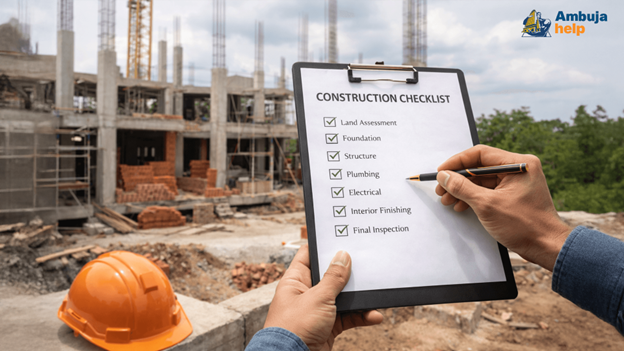
Table of Content
If you think that the process begins after the bricks are laid, then you’re very wrong. A building construction, whether it's your family home or a commercial space, involves dozens of decisions, approvals, and moving parts. Miss one, and you're looking at delays, cost overruns, or worse, building strength issues that show up after everything is done.
This checklist is designed to walk you through what to verify at every major stage of your project, in plain language, so nothing important slips through the cracks.
Stage 1: Pre-Planning and Feasibility
Before you spend a rupee on building materials or labour, get the basics locked in.
- Define what you're building. Is it a residential building, a commercial space, or a mixed-use space?
- Conduct a soil test and an area survey of your site
- Set a realistic budget, including a contingency buffer of at least 10%
- Identify all stakeholders: your contractor, engineers, architect, and local government contacts
- Assess the financial feasibility. Can your funding sustain the full project timeline?
Stage 2: Legal Compliance and Permits
No construction should begin without the building construction stage being fully complete.
- Verify land ownership documents like titles, deeds, and encumbrance certificates
- Obtain all necessary building permits and zoning clearances
- Check compliance with municipality rules, fire safety norms, and area regulations
- Secure builder's risk insurance and workers' compensation coverage
Delays at this stage are frustrating, but far less expensive than being told to halt construction after it has begun.
Stage 3: Design and Engineering
This is where your project takes shape on paper before it takes shape on the ground.
- Finalise the house design plans and align them with local regulations
- Get structural safety validated, wind load, seismic resistance, and material standards
- Coordinate MEP (mechanical, electrical, plumbing) systems early, so they don't conflict with the structure
- Consider incorporating sustainable construction materials at the design stage.
Stage 4: Contracts and Procurement
| What to Verify | Why It Matters |
|---|---|
| Contractor licences and past work | Prevents engaging unqualified or unreliable labour |
| Clearly defined scope of work | Avoids disputes over what's included |
| Transparent bidding process | Ensures fair pricing |
| Supplier reliability for key materials | Prevents mid-project supply shortages |
| Payment schedule tied to milestones | Keeps cash flow aligned with progress |
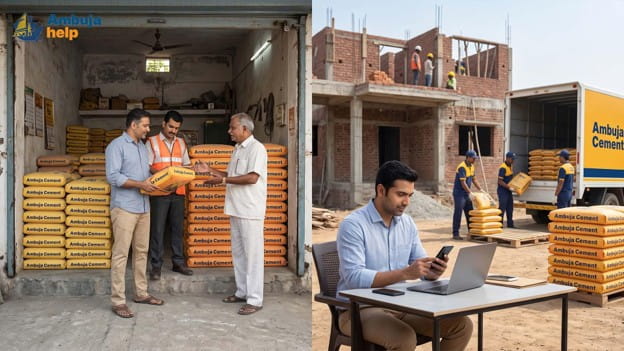
This stage is especially important at the starting stages when you’re ordering in your raw building materials, like Cement, steel, and aggregates, which should ideally be sourced from verified, authorised dealers. Ambuja Cement supplies through an authorised dealer network that ensures quality control and traceability. This system proves to be the most reliable and useful when you need documentation for building audits or insurance purposes.
Stage 5: Project Scheduling and Management
A project without a schedule is just a plan waiting to fail.
- Create a Work Breakdown Structure (WBS), dividing the project into manageable phases
- Build a Gantt chart to track progress visually
- Use the Critical Path Method to identify which tasks, if delayed, will push the entire timeline
- Assign resources like labour, machinery, and materials needed for each phase
- Prepare a risk management plan covering weather delays, material price fluctuations, and labour gaps
Stage 6: Health, Safety, and Environment
This stage is non-negotiable in any responsible building construction project.
- Develop a site safety plan with PPE requirements, emergency procedures, and regular audits
- Identify and document all on-site hazards before work begins
- Train every worker on first aid, fire safety, and machinery handling
- Set up a proper waste management system to separate debris, recycle where possible, and control dust and runoff
- Protect neighbouring properties and public spaces from construction impact
Stage 7: Financial Controls
| Financial Check | Recommended Action |
|---|---|
| Detailed cost plan | Break down labour, materials, and overheads separately |
| Cash flow forecast | Align payment cycles with construction milestones |
| Tax compliance | Verify GST applicability on materials and contracts |
| Contingency reserve | Set aside 5–10% of the total budget |
| Monthly financial audits | Track actuals versus estimates regularly |
Stage 8: Final Pre-Construction Verification
Before breaking ground, run through this one last time:
- All permits and approvals are in hand
- Contracts are signed with all key parties
- Site is cleared, secured, and ready
- Safety and HSE plans are briefed to all workers
- Materials, especially cement and steel, are sourced from authorised suppliers
- Budget and contingency are confirmed
Building Right Starts With Planning Right
Every stage of a construction project has its own set of risks. The checklist above doesn’t necessarily guarantee a solution for all, but it will ensure you're not caught off guard by the entirely preventable ones. Use this guide, and revisit it at each stage, add to the list as your project evolves, and make sure your entire team is aligned with it.
For sustainable building material planning specifically, using Ambuja Cement's platform, which includes tools to help estimate material quantities and costs, can help in tightening the budget before you commit to procurement. After all, a good construction is as much about preparation as it is about execution.
FAQs
Q.1 Which building construction materials are most durable?
Durable construction materials include high-grade cement, steel, concrete, and stone. Their longevity depends on proper selection, quality, and application. Using Ambuja Cement ensures consistent strength and performance, reducing the risk of cracks, seepage, and structural damage over the lifespan of the building.
Q.2 Which sustainable construction materials should I choose?
Sustainable materials include AAC blocks, fly ash-based cement, recycled steel, and locally sourced stone. These reduce environmental impact while maintaining durability. Choosing materials that improve energy efficiency, like insulated blocks or reflective surfaces, also helps create eco-friendly buildings that are cost-effective and comfortable over the long term.
Q.3 What are the essential building materials for house construction?
Essential materials include cement, steel reinforcement, sand, aggregates, bricks or blocks, and water. Each plays a critical role in structural integrity. Sourcing these from reliable suppliers and ensuring proper quality checks at every stage helps prevent construction defects and ensures the building remains strong and safe for years.
Q.4 Which cement brands are top-rated in India?
Top-rated cement brands include Ambuja Cement and ACC Cement. These brands are trusted for consistent quality, certified standards, and strong dealer networks, making them preferred choices for both residential and commercial construction projects across India.
Q.5 Why is pre-construction planning important in building projects?
Pre-construction planning helps identify risks, control costs, and ensure compliance with legal and safety requirements. It aligns all stakeholders, defines timelines, and secures quality materials in advance. Proper planning reduces delays, avoids costly mistakes, and ensures that the construction process runs smoothly from start to finish.